
May 28, 2026 | Blog
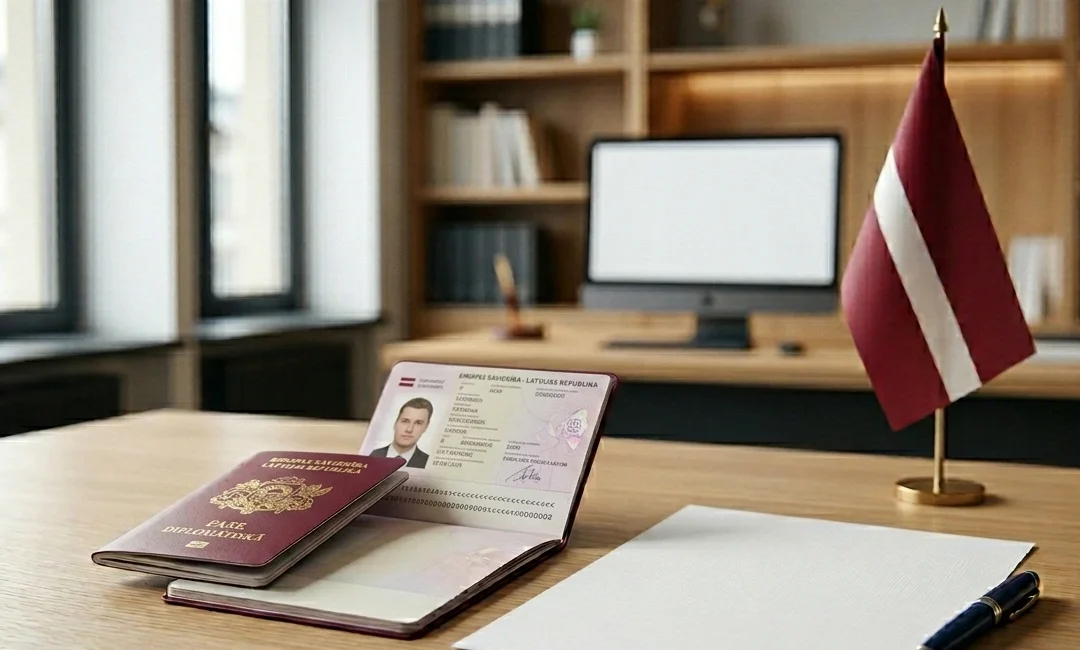
Latvian passport name spelling can surprise people who are used to seeing their name written only in English, German, Russian, Polish, or another foreign-language form. In Latvian identity and citizenship documents, a personal name is usually adapted to the Latvian language system. This means that the name may look different from the spelling shown in a US passport, birth certificate, marriage certificate, or historical family document.
For people applying for Latvian citizenship, renewing a Latvian passport, or comparing records across countries, this difference does not automatically mean that the name is wrong. In many cases, it reflects Latvian name transliteration, grammatical endings, and official spelling rules. Understanding how the system works helps avoid confusion when reviewing citizenship records, passport data, and supporting documents.
Why Names Are Spelled Differently in Latvian Documents
Latvian is an inflected language, which means that names are adapted so they can function grammatically in Latvian. Foreign names in Latvian passports are not always copied letter by letter from the original document. Instead, they are normally written according to Latvian pronunciation, alphabet rules, and grammatical structure.
This is why a name that ends in a consonant in English may receive an additional Latvian ending. A masculine name may receive an ending such as “-s” or “-is”, while a feminine surname may be adapted differently depending on its linguistic origin and form. These Latvian name endings in passports are not usually treated as a separate personal name chosen by the applicant. They are part of the official Latvian spelling of the name.
For example, a foreign surname may be changed so that it can be pronounced and declined in Latvian. The goal is not to create a new identity, but to record the person’s name in a form that fits Latvian language rules.
How Latvian Name Transliteration Works
Latvian name transliteration is usually based on pronunciation rather than a simple letter-for-letter replacement. This is important because the same letters may sound different in English, German, French, Polish, Russian, or Lithuanian. Latvian authorities generally look at how the original name is pronounced and then reproduce that sound using Latvian letters.
This approach explains why Latvianized names in passports may look unfamiliar to the holder. An English “John” or a Slavic surname may be adapted into a form that reflects Latvian phonetics and grammar. The written result may differ from the original spelling, but the legal purpose is to connect the Latvian form with the same person.
Latvian name spelling rules can also depend on the source language. Names from English, Russian, German, Polish, Lithuanian, and other languages may be adapted under different linguistic principles. This is one reason why two visually similar surnames may not always receive the same Latvian spelling.
Foreign Names in Latvian Passports
Foreign names in Latvian passports are usually shown in the Latvian spelling on the main personal data page. For a person from the United States or another English-speaking country, this can create a visible difference between the Latvian passport and foreign civil documents.
The Latvian spelling of foreign names may affect both given names and surnames. It can also affect names acquired through marriage, names inherited from ancestors, and names appearing in citizenship restoration documents. If the person has several foreign documents with slightly different spellings, Latvian records may need to establish which form is the correct original or historically supported version.
For citizenship applicants, this is especially relevant when family documents contain older spellings, transliterations from Cyrillic, Germanized forms, or records issued in different countries. Name differences in Latvian citizenship documents should be reviewed carefully, but they do not always mean that the documents refer to different people.
Latvian Passport Original Name Page 3
A common concern is whether the original foreign-language spelling can appear in a Latvian passport. In practice, the Latvian passport original name page 3 issue is important because the passport may include the original form of the name separately from the Latvian spelling.
This means that the main passport page may show the Latvianized version, while another page may indicate the original or historical form of the name if the required supporting documents are accepted. For people whose US documents show one spelling and Latvian documents show another, this can help explain the relationship between both forms.
However, the original spelling is not always a replacement for the Latvian spelling on the main passport page. The Latvian form remains the official form used in Latvian identity records, while the original form may serve as an additional identification reference.
Name Differences in Latvian Citizenship Documents
Name differences in Latvian citizenship documents are common when a person’s family history crosses several languages and legal systems. A Latvian ancestor may appear in one record with a Latvian spelling, in another with a German or Russian form, and in a later immigration document with an English spelling.
For US-based applicants, this can be especially confusing. A family name may have changed after immigration, marriage, naturalization, or translation. In some cases, the difference is historical. In other cases, it comes from transliteration. In citizenship restoration files, the key question is usually whether the documents can reasonably establish that the different spellings refer to the same family line.
Applicants should not assume that every spelling variation is a serious problem. At the same time, they should not ignore major inconsistencies. Dates, places of birth, family relationships, marriage records, and archival documents may all become important when proving that several name forms belong to the same person or family.
Latvian Citizenship Name Transliteration
Latvian citizenship name transliteration becomes relevant after citizenship is recognized or when personal data is entered into Latvian official records. The name that appears in foreign documents may need to be rendered in Latvian before a passport or eID card is issued.
This step should be treated as part of identity record preparation, not just passport design. Latvian authorities generally issue identity documents based on the data recorded in the Latvian Register of Natural Persons. If a name change, marriage, birth abroad, or correction has not been properly reflected in Latvian records, the passport process may be delayed.
For this reason, people applying from the United States should review their civil documents before submitting passport-related paperwork. Birth certificates, marriage certificates, name change orders, previous passports, and citizenship decisions should be consistent enough to support the requested personal data.
When Name Spelling May Cause Practical Problems
Latvian passport name spelling may create practical questions when a person uses documents from several countries. Airline tickets, bank records, university records, immigration files, and foreign passports may use the original spelling, while the Latvian passport may show the Latvianized version.
This does not automatically make the Latvian passport incorrect. The main issue is whether the person can show that both forms refer to the same individual. The additional original name entry, supporting civil documents, and consistent use of dates and identity details can help reduce confusion.
Problems are more likely when the spelling difference is combined with another inconsistency, such as a different date of birth, missing middle name, changed surname after marriage, or conflicting order of given names. In such cases, the spelling issue should be reviewed together with the full document history.
How to Check the Correct Latvian Spelling of a Name
The correct Latvian spelling of foreign names is not always obvious from online examples. A name should not be guessed only by adding “-s” or changing a few letters. The source language, pronunciation, gender, existing Latvian records, and documentary evidence may all matter.
If a person is preparing Latvian citizenship or passport documents, it is better to check the spelling before submitting forms. This is especially important for surnames from languages with sounds that do not directly correspond to Latvian letters, names with diacritics, and names that have already appeared in several historical forms.
A careful review can help prevent avoidable discrepancies between the citizenship decision, Latvian register data, passport application, and foreign documents. It can also make it easier to explain why Latvianized names in passports differ from the original foreign spelling.
FAQ
Why does my Latvian passport show a different spelling of my name?
Your Latvian passport may show a different spelling because foreign names are usually adapted to Latvian pronunciation, alphabet rules, and grammar. This can include changes in letters and the addition of Latvian name endings.
Is the Latvian spelling of my foreign name a legal name change?
Usually, Latvian transliteration is not the same as voluntarily changing your name. It is the official Latvian-language form of your name for use in Latvian records and documents. A formal name change is a separate legal matter.
Can my original name spelling appear in a Latvian passport?
In many cases, the original or historical form of the name may be indicated separately if the person provides documents supporting that form. This is commonly discussed in relation to the Latvian passport original name page 3.
Why are Latvian name endings added in passports?
Latvian name endings are added because Latvian grammar requires many personal names to show gender and function within the language. This is one of the main reasons foreign names in Latvian passports may look different from the original spelling.
Do name differences affect Latvian citizenship applications?
Name differences can matter, but they do not automatically prevent a citizenship application. The important issue is whether the documents can show that the different spellings refer to the same person or family line.
Should I use the Latvianized name or original spelling on foreign documents?
Foreign institutions usually follow their own document rules. In many situations, the Latvianized spelling in the Latvian passport and the original spelling in foreign documents can coexist, provided the connection between both forms is clear.
May 28, 2026 | Blog
Receiving Latvian citizenship approval is a major milestone, but it is not usually the final practical step. Approval confirms that the Latvian authorities have recognized or granted your citizenship status. After that, you still need to make sure your personal data is correctly recorded and then apply for Latvian identity documents, usually a passport, an ID card, or both.
For applicants in the United States, the process after approval often feels unclear because citizenship recognition and passport issuance are separate stages. A Latvian citizenship certificate, decision, or official confirmation may prove that your status has been approved, but it does not replace a passport or eID card for identification and travel purposes.
What Citizenship Approval Means in Practice
After Latvian citizenship approval, your status must be reflected in Latvia’s official records. In practical terms, this means that your citizenship, name, surname, and other personal data should be correct in the Register of Natural Persons before you apply for identity documents.
This stage is especially important for people applying through ancestry, exile, or descent. If your documents include name changes, spelling differences, marriage records, or transliteration from another language, those details may affect how your Latvian name appears in official documents. Before moving from a Latvian citizenship certificate to passport issuance, the data used for the passport should be checked carefully.
Approval itself does not automatically produce a Latvian passport. It gives you the legal basis to request one. The next step is to apply for the relevant Latvian identity documents through the competent authority or, if you live abroad, through a Latvian diplomatic or consular mission.
Latvian Citizenship Certificate and Official Confirmation
Many applicants refer to the post-approval document as a Latvian citizenship certificate. In practice, the wording may differ depending on the route and the authority handling the case. You may receive a decision, letter, or other official confirmation showing that Latvian citizenship has been granted, restored, or recognized.
For first-time passport and eID applications abroad, the key document is usually the official decision or confirmation from the Office of Citizenship and Migration Affairs. This document connects the approval stage with the identity document stage.
It is important not to treat the certificate or decision as a travel document. It may help prove your citizenship status, but it does not function as a Latvian passport, does not contain biometric passport data, and is not normally used for international travel.
Latvian Passport After Citizenship Approval
A Latvian passport after citizenship approval is obtained through a separate application. If you are in Latvia, this is usually handled through the Office of Citizenship and Migration Affairs. If you are in the United States, the application is generally submitted in person through the Embassy of Latvia.
The passport application cannot normally be completed only by email or mail because identity documents require personal appearance, identity verification, and biometric data. The applicant must schedule an appointment, prepare the required forms, and bring the necessary supporting documents.
For a first Latvian passport after approval, the required documents may include the official citizenship decision, a valid identity document, the passport or eID application form, and proof of lawful residence in the United States. If you previously held a Latvian passport or eID card, expired or existing documents may also be relevant.
Latvian ID Card After Citizenship Approval
The Latvian ID card, also called the eID card, is not just a plastic identity document. It confirms identity and legal status, and it can also support access to Latvian digital services where electronic identification or e-signature is required.
For many new citizens, the Latvian ID card after citizenship approval is handled together with the passport application. This is practical because both documents require similar identity checks and an in-person appointment. For Latvian nationals who have reached the relevant age threshold, the eID card is treated as a mandatory identity document.
A Latvian eID card for new citizens may be particularly useful if you expect to interact with Latvian public institutions, sign documents electronically, manage official correspondence, or handle future civil-status updates. Even if you mainly want a passport for travel, the eID card can be important for administrative life as a Latvian citizen.
Passport and ID Card Requirements for New Citizens
Latvian passport and ID card requirements depend on where you apply and whether this is your first Latvian identity document. The general principle is that your personal data must be correct in the Latvian register before the passport or eID application is accepted.
If your name changed after marriage, divorce, adoption, or another legal event, that change may need to be registered before the passport application. The same applies if a child was born abroad and their details must be entered into Latvian records. Errors at this stage can lead to delays or to documents being issued with unexpected spelling.
For U.S.-based applicants, it is also common to provide proof of permanent or lawful residence in the United States, such as a U.S. passport, permanent resident card, visa record, work authorization, or other accepted document. Requirements should always be checked before the appointment because consular instructions can change.
From Latvian Citizenship Certificate to Passport
The transition from Latvian citizenship certificate to passport is best understood as a sequence. First, citizenship is approved or recognized. Second, the applicant confirms that the official Latvian records are accurate. Third, the applicant books an appointment for identity documents. Fourth, the applicant appears in person and submits the passport and eID application.
This sequence matters because approval alone does not always mean the passport can be issued immediately. If the Register of Natural Persons contains outdated information, or if a name change has not been registered, the application may need to be corrected before the document stage can proceed.
For Latvian citizenship by descent passport next steps, this is often the most important practical point. The descent case may be legally complete, but passport issuance still depends on identity-document rules, biometric submission, and correct personal data.
Applying From the United States
U.S.-based applicants usually do not need to travel to Latvia solely to apply for a Latvian passport or ID card. In many cases, the application can be submitted through the Embassy of Latvia in the United States, provided that an appointment is available and the applicant brings the required documents.
The appointment is personal. Adults appear for themselves, and children must usually be present as well because identity documents require biometric processing or an official photo. Parents or legal guardians handle document formalities for minors, but the child’s presence may still be required.
Processing time can vary. Embassy-issued documents may take longer than documents issued directly in Latvia because production, consular processing, and delivery logistics are involved. Applicants should avoid booking travel based only on approval of citizenship unless they already hold a valid Latvian travel document.
Common Delays After Approval
The most common delays after approval are not usually caused by citizenship eligibility. They are more often linked to document administration. A name may not match across records, a marriage certificate may not have been registered, a residence address may be outdated, or the applicant may not have brought the correct confirmation of citizenship approval.
Another frequent issue is assuming that the passport is automatic. Latvian citizenship approval next steps require a separate application for identity documents. Missing this distinction can cause confusion, especially for applicants who completed the citizenship process remotely and expect the passport to arrive without a separate appointment.
Applicants should also be cautious with old family spellings. Latvian documents may use Latvian-language forms of names, including diacritical marks or grammatical endings. The final spelling used in the passport should correspond to Latvian official records, not only to the spelling used in U.S. documents.
What to Do Before the Passport Appointment
Before the passport or eID appointment, review the approval notice or citizenship decision, your current passport, proof of U.S. residence, and any civil-status documents that may affect your identity data. If your surname changed due to marriage or divorce, confirm whether that event is already reflected in Latvian records.
It is also useful to check whether you are applying for a passport only, an eID card only, or both documents together. For many new citizens, applying for both at the same appointment is the most efficient option, especially when an eID card is mandatory or practically useful.
Forms may need to be completed in Latvian, and the embassy or authority may have specific formatting rules. Since requirements can vary by location and applicant profile, the safest approach is to rely on the instructions provided by the relevant Latvian authority for your appointment.
FAQ
What happens after Latvian citizenship approval?
After approval, your citizenship status must be correctly reflected in Latvian records. Then you can apply for Latvian identity documents, usually a passport, an eID card, or both. Approval itself does not automatically issue a passport.
Is a Latvian citizenship certificate the same as a passport?
No. A Latvian citizenship certificate, decision, or approval letter may confirm your citizenship status, but it is not a travel document. To travel as a Latvian citizen, you generally need a valid Latvian passport or, for certain countries, a Latvian citizen’s eID card.
Can I apply for a Latvian passport after citizenship approval from the USA?
Yes, many U.S.-based citizens apply through the Latvian Embassy in the United States. The application normally requires an in-person appointment, identity verification, required forms, and supporting documents.
Do new Latvian citizens need an eID card?
For Latvian nationals above the applicable age threshold, the eID card is generally treated as a mandatory identity document. It is also useful for digital identification, electronic signatures, and interaction with Latvian public services.
How long does it take to receive a Latvian passport after approval?
The timing depends on where the application is submitted and whether the documents are complete. Applications submitted through an embassy may take longer than applications submitted in Latvia. Applicants should check the current processing guidance before making travel plans.
What documents are usually needed for the first Latvian passport?
For a first passport after approval, applicants usually need the official citizenship decision or confirmation, a valid identity document, application forms, and proof of residence in the country where they apply. Additional documents may be required if personal data, name spelling, or civil status must be updated.
May 25, 2026 | Blog
Changing a surname after marriage affects more than the wording in a passport. For a Latvian citizen, the new surname must be reflected in the civil status record, the Register of Natural Persons, and the identity documents used for travel. Once the married surname is legally recorded, the old passport should not be used as if the personal data were still current.
This guide explains how to change your name after marriage, which documents are usually required, and what to do after the new passport is issued. It is intended for people who married in Latvia or abroad and now need to understand how the marriage record, Latvian passport, ID card, and other personal documents should be updated.
Changing Your Name After Marriage in Latvia
A person may keep the existing surname after marriage or choose a married surname according to the rules applicable to civil status records. If the marriage is registered in Latvia, the chosen surname is normally recorded during the marriage registration. If the marriage was concluded abroad, the marriage and surname change must first be reported to Latvia so that the information can be entered into the Latvian Register of Natural Persons.
A new passport can be issued under the married surname only when Latvian records contain a legal basis for the change. In most cases, this basis is a marriage certificate and an updated official record showing the new surname. This is why the passport step should not be treated as the first step. The passport follows the civil record, not the other way around.
When you can legally change your surname
A married person can usually take the spouse’s surname, add the spouse’s surname, or use another form allowed by Latvian law. The exact spelling matters, especially where a foreign surname must be adapted to Latvian language rules. The same surname should appear consistently in the Register, passport application, foreign documents, tickets, and banking records.
If the marriage was registered abroad, the foreign certificate may not be enough by itself for a Latvian passport update. The document may need to be translated, certified, or legalised depending on the issuing country and the document format. Before applying for a passport, it is important to make sure the new surname has been accepted and reflected in Latvian official records.
Rules for married name changes in Latvia
The main rule is consistency. Latvian authorities issue identity documents based on the official data recorded in state registers. If the marriage record shows one surname and the passport application uses another spelling, the application may be delayed or refused until the discrepancy is corrected.
Another important rule concerns timing. If a person has married abroad and changed surname, the change should be reported to Latvian authorities within the required timeframe. Delaying this step can create practical problems, especially where the person needs to travel, renew a residence document, apply for a visa, or update bank records.
How to Change Your Name on a Latvian Passport
To change name on passport after marriage, first make sure the marriage and new surname are correctly reflected in Latvian records. The application itself is not a simple correction of a passport page. It is the issue of a new identity document based on updated official data.
The usual sequence is: register or report the marriage, confirm the married surname in Latvian records, prepare the passport application, submit the previous passport or eID card, pay the required fee, and collect the new document. In Latvia, applications are submitted to the Office of Citizenship and Migration Affairs. Abroad, they are usually submitted through a Latvian embassy or consular office.
Step-by-step passport name change process
First, check where the marriage was registered. If it was registered in Latvia and the new surname was chosen during the ceremony, the record may already show the correct name. If it was registered abroad, submit the foreign marriage certificate and supporting documents to update the Register of Natural Persons.
Second, confirm the Latvian spelling of the married surname. This is especially important where the spouse’s surname is foreign, contains letters not used in Latvian, or has a different grammatical form.
Third, book the passport appointment and prepare the application. Bring the previous Latvian passport or eID card and any supporting documents requested by the authority. After the new passport is issued, use it as the main document for updating other records.
Where to apply and how long it takes
In Latvia, the passport and eID application is usually handled by the Office of Citizenship and Migration Affairs. If the person lives outside Latvia, the application may be submitted through a Latvian diplomatic or consular mission. The exact timing depends on the place of application, workload, document checks, and whether the applicant chooses standard or expedited processing where available.
People who search for how to change last name on passport often focus only on the passport office. In practice, the timeline also depends on how quickly the marriage record can be accepted and reflected in Latvian data systems. A complete and properly certified document package usually reduces the risk of delays.
Documents Required for a Marriage Name Change
The exact marriage name change documents depend on the country of marriage and the Latvian record. Usually, the applicant should prepare the previous Latvian passport or eID card, the marriage certificate, the passport application form, and evidence that the surname change has been registered or reported correctly.
If the certificate was issued abroad, it may need a certified Latvian translation, apostille, or legalisation, unless an exemption applies. This should be checked before the appointment, because an uncertified or untranslated document can delay the application. It is also useful to keep copies of all submitted documents for later updates with banks, tax authorities, employers, and travel providers.
Marriage name change documents checklist
A practical checklist should include the current or previous Latvian passport or eID card, the marriage certificate, a Latvian translation if required, apostille or legalisation if required, a copy of the spouse’s identity document where needed for reporting a foreign marriage, the completed application form, and a payment method for the state or consular fee.
This marriage name change documents list should be reviewed before submission. If the applicant also needs to confirm status before dealing with passport or citizenship matters, the page on latvian citizenship eligibility — https://latviancitizenship.eu/eligibility/ — may be a useful reference.
Identity, marriage certificate, and supporting records
The passport authority must be able to connect the applicant’s previous identity with the new married surname. This is why the marriage certificate is central to the process. It shows the legal event that caused the change and helps confirm that the new surname is not an unrelated personal amendment.
Additional supporting records may be needed if the applicant’s name appears differently in various documents. This can happen after transliteration, previous name changes, divorce, remarriage, or the use of a foreign-language document. Where records are inconsistent, the applicant may need to correct the source document or provide additional proof before the new passport can be issued.
Updating Other Documents After Marriage
After the new passport is issued, the surname should be updated across official and private records. This helps avoid rejected payments, mismatched tax data, travel issues, and problems with proving identity. The passport becomes the main document for international use, but many systems will still show the former surname until corrected.
The safest order is to update identity and residence documents first, then banking, tax, employment, insurance, education, and travel records. If the person has pending applications, active visas, residence permits, or property records, these should also be checked carefully.
Passport, ID card, and residency records
A Latvian passport and eID card should show the same personal data. If both documents are held, both may need replacement after a surname change. For people living abroad, residence permits, local ID records, or foreign immigration files may also need to be updated after the Latvian passport has been changed.
Failure to update residence records can create practical complications. For example, a residence permit in one surname and a passport in another may raise questions during travel, employment checks, or administrative procedures. The marriage certificate can help explain the difference, but it is better to update the records wherever possible.
Banks, tax records, and travel documents
Banks, tax authorities, employers, insurance providers, universities, airlines, and healthcare systems often rely on passport data. Once the new passport is issued, contact these institutions and ask what proof they require. Some may accept the new passport only, while others may request the marriage certificate as evidence of the surname change.
For travel-related records, check existing bookings, frequent flyer profiles, visa applications, and travel insurance. A ticket booked under the old surname may need to be changed if the traveller will use a new passport. The name in the booking should match the passport used at check-in and border control.
Name Change After Marriage Checklist
A clear name change after marriage checklist should begin with the legal record and end with everyday accounts. First, confirm the surname selected in the marriage record. Second, update the Register of Natural Persons if the marriage was concluded abroad. Third, apply for the new passport and eID card where required. Fourth, update residence, banking, tax, employment, insurance, and travel records.
This order matters because many institutions will not update their files until the new passport is available. Treat the passport as the central document for secondary records. The more consistent the data is across systems, the lower the risk of delays, rejected applications, or identity questions.
What to update first
Start with Latvian civil and population records. Then update the passport and eID card. After that, update immigration records, bank accounts, tax data, employment files, medical insurance, education records, property documents, and travel profiles.
If there are urgent travel plans, review the passport and ticket names before changing anything. In some cases, it may be more practical to travel under the current passport first and complete the surname change after returning. In other cases, the new passport should be obtained before travel.
Common mistakes and delays to avoid
Common mistakes include applying before the Latvian record has been updated, submitting a foreign marriage certificate without the required translation or certification, using inconsistent surname spelling, and booking travel under the wrong surname. Another frequent error is assuming that the old passport remains usable until its expiry date.
If the surname has legally changed, the old passport may no longer reflect the holder’s legal identity. This can create problems even if the passport has not expired. Before using any document after marriage, check whether the personal data in it still matches the official record.
Travel and Passport Issues After a Name Change
Travel is often the most sensitive part of the process. If travel is planned immediately after the wedding, the timing of the surname change should be considered in advance. In some cases, a person may decide to travel under the existing surname first and complete the surname change later. In other cases, the new passport should be obtained before travel.
People often ask how to change your name after marriage only after tickets or visa appointments have already been booked. At that stage, the key issue is whether the surname on the ticket, visa, insurance, and passport still matches. If the new surname has already been recorded and a new passport is being issued, the booking may need to be corrected.
Booking flights with an old surname
Airlines generally expect the passenger name to match the passport used for travel. If a flight was booked under the former surname and the traveller now has a passport in the married surname, the airline may require a ticket correction. Some airlines allow minor name corrections, while others treat a surname change as a more formal amendment.
Before booking, decide which passport will be used for travel. If the old passport is still legally valid and the surname has not yet been changed in Latvian records, booking under the old surname may be consistent. If the new passport will be used, the booking should be made under the married surname.
Passport validity and international travel concerns
Passport validity is not only about the expiry date. A passport may still be physically unexpired, but if the surname in it no longer matches the legal record, it can create problems at check-in, border control, or during visa checks.
Before travelling, check the passport surname, ticket surname, visa surname, residence permit data, and travel insurance. A marriage certificate may explain the change, but airlines and border authorities usually rely on passport and booking data. For broader assistance with Latvian document and citizenship matters, visit https://latviancitizenship.eu/.
Final Guide to Changing Your Name After Marriage in Latvia
The safest way to manage a married surname is to follow the correct order: record the marriage, confirm the Latvian spelling, update the Register where necessary, apply for a new passport and eID card, and then update all dependent records.
For Latvian documents, the passport step comes after the surname has been legally recorded. Prepare the documents in advance, check translation and certification rules for foreign certificates, and avoid using the old passport for travel once the surname change has taken effect.
For anyone trying to understand how to change your name after marriage, the main principle is simple: update the legal record first, then replace the passport, and only after that update banks, tax records, tickets, insurance, and other systems. This order helps keep the process predictable and reduces the risk of conflicting identity data.
May 1, 2026 | Blog
Let’s assume you have already received a European passport. You’ve dreamed of it for a long time, so first of all, congratulations! Decades of waiting, collecting archival documents, and nerves — it’s all behind you. It seems you can breathe a sigh of relief because you are officially a European now! But what comes next? The euphoria has passed, and you can look at the situation critically. And now it has become clear that your whole family is still there, outside the European Union. And they are waiting for you. They hope that their future is also inseparable from the concept of a “European.” Now we have to answer the most important question: do you have the right to simply move them all over tomorrow? Unfortunately, no. Bureaucracy is not about family warmth or emotions, but solely about legal facts. A family torn apart by the borders of different countries brings indescribable pain. Our specialists see this quite often during client consultations. People naively think that their EU passport is an automatic ticket to Latvia for all their relatives. Cast aside these dreams, because in reality, family reunification is a legal quest. The mission of this article is not only to destroy all myths and tell the harsh truth but also to give important advice, so it’s worth reading to the end.
Can You Move Your Family to Latvia After Citizenship
The citizenship acquisition law in Latvia is quite strict. But it is on your side if you are not alone, but with a specialist. Why the strictness? The state carefully guards its borders against relatives who are related only on paper.
Rights of a Latvian citizen to bring family
The undeniable right of every citizen is to live together with their loved ones. This is a constitutional right, and it is enshrined in all European legislative acts. However, to exercise it, the state will demand proof. That is why your right is not realized automatically. You will be tasked with proving that you can support them in the country where you have decided to move. Officials absolutely do not care about your emotions and how much you miss your relatives. They are only interested in how diligently you pay taxes, the amounts in your bank accounts, and the square footage of your owned or rented housing. These are the realities.
Who qualifies as family under Latvian law
Who falls under state protection? To begin with, let’s note that the definition of Latvia family in immigration law is extremely narrow. The law includes the following categories in this list:
The list is short, so if you want to relocate elderly parents, brothers, or sisters, get ready to fight the bureaucratic machine. Relocating older relatives is only possible provided you prove their physical and/or financial dependence on you. But believe me, proving this with documents is incredibly difficult.
Immigration to Latvia for Family Members
Love solves everything only in the movies, but in practice, it does not grant citizenship. Your wife does not get a European passport automatically after the wedding. So, to go on a honeymoon to Europe, you will still have to spend time and effort obtaining all the necessary documents.
Latvia residency options for spouses and children
We advise you to also forget about any instant privileges. Official immigration to Latvia for your spouse begins with a temporary residence permit (TUA). At first, they only get resident status. Later — access to the labor market. The situation is somewhat easier with children under 18, as their legal status is tied to your citizenship.
Latvia country visa requirements for entry
So now we come to an important question — how can the family legally enter moving forward? A tourist visa waiver does not open access to the legalization process. Your relatives will need a special long-term Latvia country visa category D. It allows staying in the country for more than 90 days and fully legally waiting for the documents to be reviewed by the Office of Citizenship and Migration Affairs (PMLP). Entering with a regular tourist Schengen visa with the aim of subsequent reunification is the worst decision you could make, which can provoke a refusal and subsequent deportation.
Residence Permits for Family Members
Prepare yourself for the fact that the legalization process is a marathon that can exhaust the psyche. You will have to collect a pile of documents, survive possible returns for additions, and this significantly undermines faith in a positive final result.
How to become a resident of Latvia
To officially cross the border and become a resident of Latvia, your loved ones must undergo a thorough security check. What do we mean? At a minimum, you must be ready for:
- biometrics,
- huge application forms,
- police clearance certificates (criminal record checks) from all countries of previous residence over recent years.
Know that Latvian security services carefully check every step of your relatives applying for permanent residence in their country. The slightest hidden detail or lie in the application, and the very next moment you will receive a refusal and a multi-year ban on entering the EU.
Temporary vs permanent residence permits
Do not hope that you will get a passport right away. At first, you will only have temporary plastic in your hands. But don’t be alarmed, this situation lasts for one year. Unfortunately, you will need to constantly renew this card. Of course, there is little pleasant about this, and the situation itself can be annoying, as it takes a lot of time. But that’s the law, and there is nothing you can do about it. The only thing you can do is be patient, because only after five years of continuous legal residence will your family be able to claim permanent Latvia residency (EUA). Don’t forget to inform them that they will also have to pass a Latvian language exam at the A2 level. Language is the main filter of the system, so you will need to get thick textbooks and start studying in advance.
Step-by-Step Process to Relocate Your Family
No matter how loyal the laws are, they do not forgive mistakes. That is why you must tune in to the unconditional fulfillment of the requirements of state authorities. However, like any state institution, the Migration Service consists of people who can help you; the main thing is to follow the rules and know the cheat codes, which we will discuss next.
Preparing documents and submitting applications
Does it seem to you that collecting all the necessary documents to obtain the right to cross the border for relatives is a mission with increased complexity? You are somewhat right. But to make it easier for you to do this, keep a useful checklist:
- Collect apostilled marriage certificates.
- Legalize the birth certificates of each child.
- Order notarized translations exclusively into the Latvian language.
These documents must be submitted either through the embassy in your country of origin or directly at the PMLP offices in Riga. Structure everything carefully, and most importantly, forget about photocopies — state bodies accept only originals!
Timeline and approval process
How long will you have to wait? This question is perhaps the most concerning. And here is the honest answer — months. The law gives officials from 30 to 90 days to review such applications. This is not a whim of the legislator, but merely a realistic assessment of the capabilities of civil servants. In the summer, the system simply chokes from the influx of foreign students and seasonal workers. That is why timelines catastrophically drag on.
However, if you want to save your nerves and time, you can pay an expedited state fee. It costs significantly more but saves weeks of unbearable waiting for an answer.
Documents Required for Family Relocation
The truth is that the state a priori suspects everyone trying to obtain citizenship of a sham marriage. The desire to obtain the main European document often prompts people to cross the line of the law. Therefore, you should treat any situations normally and not take them personally.
Proof of relationship and identity documents
Love needs protection not only within the family and society but also documented in government offices. Prepare yourself for the fact that officials will demand all valid international passports and legalized certificates from you. Often, inspectors want you to show your joint family photos from different years and printouts of correspondence. Moreover, they even have the right to conduct separate interviews with spouses to uncover lies. Therefore, if your marriage was concluded only a month ago, you will not avoid a harsh interrogation.
Financial means and accommodation proof
Love is certainly wonderful, but it won’t feed your family. Do you know where they will live? What will they buy food with? In this case, the state sees you as a sponsor who is obliged to show the presence of a stable, high, and completely official (“white”) income.
The law requires clear financial guarantees, for example, a certificate from an employer or a bank account statement. In addition, an official lease agreement stipulating enough square meters for the entire family is mandatory. What is all this for? You simply will not be allowed to bring a wife and three children into a tiny one-room apartment, and without sufficient income to boot. No one wants to add to the list of poor people in their country.
Living in Latvia as a Family
Suppose you have finally passed all the circles of bureaucratic hell, and your family is already with you. It seems you can exhale and finally start living. But true social adaptation is just beginning, and not only for family members, but also for you, but in a new capacity — as the family’s sponsor and its head.
Healthcare, education, and daily life
To begin with, we note that a wife with a temporary residence permit is obliged to have private health insurance. State-subsidized medicine is not yet available to her. Pay attention to this important point!
What about children? Public schools here are completely free. But teaching there is conducted exclusively in the Latvian language. Prepare considerable money for private international schools right now, or immediately hire local tutors, because getting an education is a basic need of your child!
Integrating into Latvian society
Isolation is the worst helper in developing relationships. Make an effort so that your family integrates. But know that northern society is quite closed and calm. Without basic knowledge of the local language, your relatives will feel like strangers. The best way out is local language courses.
Common Challenges in Family Immigration
Migration bureaucracy does not tolerate mistakes. Therefore, the slightest flaw can trigger a chain reaction of refusals and a loss of time, effort, and money. Don’t fall into this trap!
Delays, paperwork issues, and legal nuances
Missing an apostille on a certificate? Here is an official refusal! A police clearance certificate expired by just one day? Your case is already closed! And everything will have to start over, including paying the fees a second time. Tears of despair from people just looking for a path to citizenship in the corridors of the migration service are already familiar sights to our specialists. Most of them tried to save money on professional lawyers but lost precious years due to elementary mistakes in applications.
Final Checklist for Moving Your Family to Latvia
Have you already successfully proven your Latvian citizenship eligibility and are holding the coveted EU passport in your hands? Great. Now your main, vital duty is to protect your family. Do you have to fight the European bureaucratic machine on your own? No, it’s unnecessary stress, wasted money, and a risk of getting a refusal. Our migration law specialists accompany complex family reunification procedures every day. On the website https://latviancitizenship.eu/ we have collected a lot of material that will help make the system work for you and your family.
Apr 30, 2026 | Blog
What happens if you wake up one day at 3 a.m. with a temperature over 39 degrees Celsius? And what if your heart is also pounding out of your chest? Most likely, panic will set in if you wake up in a bed that isn’t your own. Yes, you might build a profitable business in Latvia or even manage to get a residence permit, but what’s next? How do you act in such a situation, considering documents offer no peace of mind when it comes to health issues? Thousands of euros in your account can be useless when you don’t know who to call to save yourself or simply treat a serious illness. And here comes the moment when a multitude of questions arise (not the best thing to deal with when you have a high fever): will treatment affect your insurance policy back home? Do local doctors understand English? Many questions to which answers are crucial, and ignorance only provokes stress. It has become common for us to see how even wealthy professionals freeze up during health issues. Foreign hospital bureaucracy can scare anyone. How do you avoid becoming part of this statistic? A European passport doesn’t protect you from infection. Ideally, you prevent it so it doesn’t ruin your life, but what if you’re already sick? Next come the hard facts. No fluff—you don’t need it. A practical guide on how to survive in a new country, written by our experts.
Overview of the Healthcare System in Latvia
Securing comprehensive health insurance for foreigners latvia remains a mandatory administrative step for anyone applying for a long-term residency permit. Medical infrastructure in the Baltic states can sometimes be surprising. You might easily see world-class doctors against the backdrop of outdated administration. Want to play this game? Since the stake here is your health, we advise you to learn the rules well.
How the Healthcare System in Latvia Works
Understand the basics: Latvian medicine is based on a mixed funding model. What does this mean? The state budget pays for basic services, patients cover the deficit with their own co-payments, and private clinics fill huge infrastructural gaps. Having inherited a Soviet hospital network, the country went through major modernization after the long-awaited restoration of independence.
Step into the Pauls Stradiņš Clinical University Hospital, and you will see progressive European technologies inside historical brick pavilions. This will definitely surprise you! The main thing is to understand where the state subsidy applies and where you’ll need your bank account. This is strategic knowledge you must know how to use. Investors often choose to supplement state coverage with private health insurance Latvia to ensure immediate access to top-tier diagnostic facilities and English-speaking specialists.
Public Health and General Medical Care
Is there constitutional protection for your health? Yes. The Medical Treatment Law guarantees emergency care regardless of your financial status. However, true universal medicine for foreigners remains rather conditional. Latvian citizens enjoy significant subsidies, but access for foreigners entirely depends on the following factors:
- residence permit category,
- employment status,
- tax payments.
Every licensed medical facility in the country operates under the strict regulatory oversight of the primary latvia health authority to maintain high safety and hygiene standards. Overall public health indicators in Latvia are at a decent level: infection control is strict, and vaccination programs work effectively. But to get state treatment, you will need to defeat the “bureaucratic dragon.”
The National Health Service of Latvia
What advice can we give? First and foremost—follow the money. A single state structure controls almost every euro spent on medicine in the country.
The Role of the National Health Service (NVD)
This is the main “controller.” The National Health Service (Nacionālais veselības dienests) strictly manages the medical budget. They negotiate drug prices, sign contracts with regional hospitals, and decide exactly which medical procedures will receive state funding in the current year. They also manage the E-health portal (E-veselība). This service monitors every electronic prescription and sick leave.
What Services Are Covered by the State?
What do you actually get? Coverage includes the following services:
- visits to a family doctor,
- emergency care,
- maternity hospital services,
- certain types of oncological treatment.
Sounds not bad? But wait before you rejoice. Adult dentistry is excluded from this list—you pay full market price for cavity treatment. Ophthalmology is also mostly paid out of pocket. Psychotherapy is barely covered by the state budget. In particular, the state focuses on critical survival, while all services for improving health fall on your wallet.
Health Insurance for Foreigners
We do not recommend traveling to the Baltic states without proper insurance. Border guards check policies upon arrival. And based on this, there can be problems at the stage of processing entry documents.
Insurance Requirements
The Immigration Law requires strict compliance with the rules for anyone wishing to visit Latvia. Mandatory insurance for foreigners implies a policy with a minimum coverage of €42,600. This amount also includes emergency repatriation. If you have a temporary residence permit, you must renew this policy every year. An expired insurance policy during a visa extension at the PMLP (Office of Citizenship and Migration Affairs) can lead to the threat of deportation. We often see our clients lose their right to reside due to negligence in handling medical documents.
Public vs. Private Insurance
Do not rely solely on the minimum “immigration” policy. Those who already have experience visiting the Baltic states choose comprehensive private insurance. Is this a coincidence? No, because they choose speed. Private policies allow you to bypass long state queues. Providers like BTA, Balta, or Ergo offer packages that cover specialized diagnostics, private dentistry, and enhanced comfort wards. Public medicine will save your life—nothing more. Private medicine is responsible for comfort. We think it goes without saying that you should choose comfort.
Access to Medical Services
You should know that having a resident card will not magically force a doctor to register you for an appointment. You must register in the system yourself.
Who is Entitled to State Services?
In fact, paying taxes opens access to services. Permanent residents with European passports or long-term visas are integrated into the medical system. If you pay social contributions (VSAOI) through an employment contract, the doors of state clinics are also open to you. If you consciously avoid local taxation, get ready to pay private rates everywhere.
How to Register with a Doctor
The first thing you need to do is find a family doctor (Ģimenes ārsts). Don’t wait until you get sick! This doctor is your main guide and assistant. You cannot get to a cardiologist at state expense without a referral specifically from a family doctor. To register, you need to contact a clinic, sign an agreement, and wait for confirmation in the NVD database. Finding an English-speaking doctor who is accepting new patients is a difficult task, but you will have to accomplish it to be able to receive further treatment.
Health issues in Latvia and system challenges
Baltic winters and lifestyle dictate their own conditions for the health of the nation. If you have just moved, both you and your body will have to get used to everything new. Continuous monitoring of regional disease trends and vaccination programs is a core responsibility of the agencies managing public health Latvia today.
System Challenges
The statistics are relentless: the main problems in Latvia are cardiovascular diseases caused by the traditional diet and high stress levels. Oncology is another critical sector that is keeping pace with global figures. There are also systemic problems: underfunding leads to a shortage of nurses, and many young doctors leave for Germany or Scandinavia for higher salaries. This “brain drain” places a serious burden on local hospitals.
Queues and Service Quality
This is the most painful topic. Queues for state diagnostics can be incredibly long. Need an MRI at state expense? Get ready to wait five months. Can’t wait? Get your wallet out: a private clinic will do the same MRI tomorrow morning for €150. The quality of services in the private sector is on par with Swiss clinics, while state hospitals provide excellent care in critical conditions, but without special service.
Regulation and Authorities
Who will protect you as a patient? There are various regulatory bodies for this that strictly monitor the observance of your rights.
The Role of the Health Inspectorate
The main regulator is the Health Inspectorate (Veselības inspekcija). They perform the following functions:
- review patient complaints,
- conduct hygiene audits,
- close unscrupulous aesthetic surgery clinics.
If a doctor has committed negligence, this is the agency that conducts the investigation. The framework of latvia universal health care ensures that all permanent residents have access to essential medical services through a state-funded insurance model.
Patient Rights
The Law on the Rights of Patients (Pacientu tiesību likums) is your main legal shield. You have the right to a “second opinion,” full control over your data, and an explanation of all risks before any intervention. Never let medical staff intimidate you—it is better to consult an expert in any unclear situation. If a language barrier prevents giving consent, the clinic must provide a translation. Defend your rights confidently.
Cost of Medical Services
Medical pricing here is quite logical and transparent. However, it won’t hurt to look at it in more detail to arm you with knowledge.
State Co-payments
Public medicine requires small co-payments (pacienta iemaksa). A visit to a family doctor costs €2.00, a day in the hospital is around €10.00, and a specialist consultation is €4.00. These nominal amounts deter hypochondriacs and keep medicine accessible for vulnerable populations. Importantly, children, pregnant women, and refugees pay nothing.
Prices in Private Clinics
Private medicine is the benchmark for price-to-quality ratio. A consultation with an English-speaking specialist costs €50–€80. Teeth cleaning is €60, and complex root canal treatment is €150–€300. This is significantly cheaper than in London or New York, which makes Riga a popular hub for medical tourism. However, remember that actual prices may vary depending on which specialist you choose.
Summary for Foreigners
Do not risk your health. Obtaining a European residence permit gives you freedom, but being unprepared for bureaucracy can ruin everything. We advise you to take care of your safety now: get high-quality insurance and register with a doctor immediately upon arrival.
Navigating the modern latvia health care system requires a clear understanding of the balance between state-subsidized services and private healthcare options. Every day at https://latviancitizenship.eu/ we help fight bureaucracy and protect your family’s future in Europe. Are you in the final stages of moving? Get your Latvian citizenship eligibility and implement it with our specialists.
Apr 29, 2026 | Blog
Every decision we make can define the future. Especially now, when choosing a country for relocation has turned into a high-stakes game. Where to flee from instability? You can find hundreds of sweet promises from companies on the internet. And on social media, we are fed perfect pictures from this or that continent. Another smiling character drinking a cappuccino on the sun-drenched terraces of Lisbon. Or successful startupers boasting about investments against the backdrop of old Riga. How can you not admire such beauty? But reality is much harsher. Just think about the migration bureaucracy! And don’t forget about the taxes they don’t tell you about. The mundane cost of renting a home also takes off those rose-colored glasses. What exactly should you choose when your family’s safety is at stake? This material is designed to help you forget the empty promotional promises from bloggers. Today, we will give you only cold facts, but just so that you can plan your finances and save your nerves during the move.
Latvia vs Portugal: Which Is Better for Relocation in 2026
These countries represent two completely different realities. The hot South versus the icy North — an epic confrontation. Conduct a cold analysis of your life plan before packing your bags and buying plane tickets. This is important, which is why we decided to arm you with knowledge.
Key differences in lifestyle and environment
The South is the capital of traditions and tranquility. The North lives by efficiency indicators. The Pyrenees (Iberian Peninsula) are associated with a relaxed pace of life, for example, siestas and the ocean breeze. Plus endless conversations over a glass of delicious wine. But you must also know about the incredibly slow resolution of any administrative matters. The bureaucracy here will make you wait months for a single piece of paper.
What about the Baltics? It is a striking contrast to all this bureaucratic hell. Here are a few advantages:
- Fast and affordable internet with high capabilities.
- Strict and emotionless business ethics.
- Paperless public services — everything is in digital mode.
And also, if you want to open a company — it is easy to do right from your smartphone! Decide for yourself what is critically more important to you! Do you crave a warm climate and an unhurried life, or the absence of red tape and a high level of public service delivery?
Who each country is best suited for
The eternal question: “Who should move where?” The answer depends solely on your ambitions. Seasoned tourists, retirees, and simply surfing enthusiasts will definitely choose the Portuguese coast. Why? It is comfortable to spend money already earned abroad there. But what if you are just looking to launch an ambitious startup now? Or maybe you need a good launching pad to start conquering European markets? Do you want taxes to be minimal and strictly comply with the law? Then you definitely need to look towards the northeast. Riga is designed for those who love to work and want to earn, not just rest on their laurels.
Cost of Living Latvia vs Portugal
Unfortunately, the reality is that money decides almost everything nowadays. A miscalculation at the start is enough to turn a European fairy tale into a terrible daily survival. Read on to learn how to prevent this.
Housing, food, and daily expenses comparison
The European real estate market has changed significantly in recent years. Lisbon, Porto, and the Algarve are in a rental crisis. Housing prices have skyrocketed to the heavens due to an uncontrolled influx of American expats with solid bank accounts. Finding an attractive apartment for a thousand euros is like winning the lottery. Get ready to race with dozens of other foreigners for an apartment in decent condition.
The Latvian market is completely different. It is stable, and this is its great advantage. Modern, stylish, and perfectly insulated apartments will cost you almost half the price, despite it being the capital. You ask about grocery prices? Yes, in the South, cheeses and seafood are cheaper, but living expenses consist of more than just food. Do you agree?
Which country is more affordable overall
When you want to figure out the cost of living latvia vs portugal using specific numbers, the capital of Latvia easily wins. The inflated cost of housing in Portugal destroys any savings you make on groceries. Now let’s add the cost of private medicine here! In the Baltics, there is a successful balance between income and the basic monthly living expenses of a whole family.
Salaries and Economic Opportunities
Everyone will agree that making money in a new place is not easy. No local job market is waiting with open arms for foreigners with ambitions. To start earning well, you first need to prove your value as a specialist. Only then can you begin to dictate your terms to the employer.
Average income and job market in Latvia
Latvia’s first advantage is the ease of job creation and doing business. Riga’s IT sector is one of the most promising. A unique flat tax rate on reinvested corporate profits (a solid zero percent) attracts international investors with high goals here. If you are a highly qualified specialist, local companies will start fighting for you. You can even expect them to offer a lucrative contract with pleasant pay. Of course, you must have the appropriate qualifications and skill set for this.
Work opportunities and wages in Portugal
Local salaries in southern Europe cause despair. This is the honest truth. Even if you didn’t count on solid sums, what is offered will seem like a joke to you. Minimum rates are simply miserable, especially compared to the cost of living. The tax burden on legally employed workers is quite harsh. And this is the honest truth. Working for a purely local Portuguese company is completely unprofitable economically. That is why the vast majority of successful specialists are exclusively freelancers. They mostly work for employers from the US or Britain. If you plan to look for a job locally, get ready for a serious financial downshift.
Latvia Citizenship vs Portugal Citizenship
Do you want to play by your own rules? It’s time to think about getting a passport. This is your ultimate argument in case of unforeseen events. Unfortunately, the path to it can be long and difficult.
Citizenship requirements and timelines
Formally, you can obtain Portugal citizenship through classic naturalization after five years of legal residence. Sounds attractive, right? However, reality differs from your vision of this situation.
The migration bureaucracy (the former SEF service, now AIMA) slows this process down to a minimum. Your application can be reviewed for years! And documents are often simply lost. No one is in a hurry in this country. Waiting seven or eight years for your passport is a normal practice.
On the other hand, Latvia citizenship through naturalization requires a full ten years of continuous residence. Add to this passing language exams and history tests. Of course, there are shorter paths, which is why our website exists, where we constantly provide recommendations to those seeking to obtain Latvian citizenship.
Dual citizenship rules and limitations
Here we have arrived at the crucial legal point. Portugal allows dual citizenship to absolutely everyone without exception. This is their huge plus. Latvia, however, forbids an economic immigrant from having two passports. You will have to give up your roots. Harsh? Yes, but completely fair. However, there is one important exception. We are talking about your origin. If your ancestors fled from occupation in the last century, the law allows you to keep both passports. Historical heritage and justice break any prohibitions. This is a legally permitted cheat code that we use for our clients.
Quality of Life and Public Services
Robust infrastructure often saves the life of anyone who has just moved to a new country. The quality of life is not measured only by air temperature and beach comfort. The speed of an ambulance arriving when you feel ill is no less important.
Healthcare, safety, and infrastructure
Street safety is another important point. You will be interested to know that the violent crime rate in Riga is practically at zero. What does this mean? It means your children can walk around the city even late at night, and you won’t worry.
What about medicine? Huge queues at public hospitals await you in both countries. However, the speed of private clinics in the North is quite fast. They are close to Swiss quality standards but at completely affordable prices. Baltic infrastructure is modernizing rapidly every year thanks to European funds. But the Portuguese healthcare system is currently experiencing a deep crisis due to a staff shortage.
Climate, culture, and lifestyle differences
Do not be misled by beautiful photos from social networks. Winter by the cold Baltic Sea is harsh. You must be prepared for a lack of sunlight and piercing, icy winds. Your psyche must be ready for this.
Portugal, on the other hand, gives you over three hundred sunny days a year. You can’t argue with this fact, and it’s wonderful. But there is a huge “but” (where would we be without it?). Along with the sun outside, you get a complete lack of central heating in houses. In winter, many Lisbon apartments can be terribly cold, damp, and develop dangerous mold. In contrast, houses in Latvia have good protection against any weather whims.
Pros and Cons of Living in Latvia vs Portugal
Let’s be honest with each other. Let’s admit that ideal countries do not exist in nature. Every country has its specific pros and cons. You just need to realistically assess the advantages and disadvantages to make the move justified.
Advantages of relocating to Latvia
In the first place, we can boldly put the comprehensive digitalization of society. Absolute physical safety on the streets. A favorable business environment awaits you without foolish taxes on retained corporate earnings. This is an ideal place to focus on a career and multiply capital.
Advantages of relocating to Portugal
For fans of warmth and ocean romance, this is an excellent choice. A tolerant, slow-paced, and welcoming society awaits you here. Visa requirements are minimal, so this vector is chosen by those starting life with a clean slate. Choose this option if you want to enjoy life, have spare funds, or simply want a peaceful old age with a cocktail under the palm trees.
Final Comparison: Latvia or Portugal for Relocation
Stop hesitating, because the longer you choose, the more time works against you. The success of the choice depends solely on your financial situation, career goals, and, most importantly, your family tree. If you are looking for peace and inspiration — boldly head to sunny Portugal. But what if you have even a drop of Baltic blood? Don’t even think about spending years on a long, humiliating naturalization in other countries. Use this cheat code, because blood is stronger than bureaucracy.
Do you want to check your Latvian citizenship eligibility? Then you are on the right path! Remember that an amateur approach is a guaranteed path to rejection. Trust professionals who are always on your side. We constantly publish useful information at https://latviancitizenship.eu/. Our experienced lawyers are able to find even forgotten historical records in closed state archives. Yes, we can do it! Your European passport is already waiting for you, so all that’s left is to take the first step towards it!
Page 6 of 10<...567...10...>





 English [EN]