
Jan 6, 2026 | Blog
Patience constitutes the primary currency regarding European migration. Unlike purchasing goods, acquiring national standing represents a marathon involving legal hurdles, security vetting, and integration milestones. For international applicants, the central question remains: “When do I get the passport?”
The answer varies wildly based on the chosen path. A descendant might secure rights within eight months, while an investor faces a decade-long trek. Understanding these chronologies prevents frustration and ensures strategic planning.
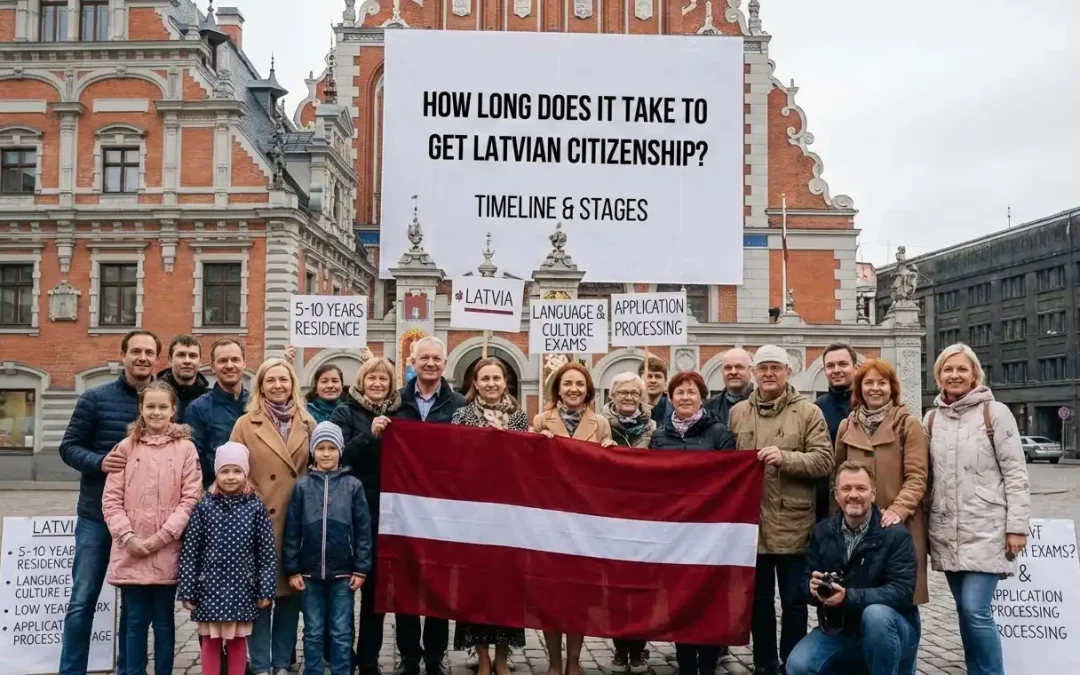
This guide dissects the temporal reality of becoming a national in 2026. We map out every stage—from initial permits toward final oaths—providing a realistic roadmap regarding How Long Does It Take to Get Latvian Citizenship?
Overview: Legal Status Architecture
Before counting months, comprehending the prize is essential.
Benefits of Full Membership
Acquiring Latvian citizenship grants more than travel convenience. It confers absolute sovereign rights. Holders vote in EU elections, access subsidized education across the bloc, and enjoy consular protection globally. Unlike temporary permits, this status remains irrevocable (barring fraud) and hereditary, securing future generations.
General Eligibility Scopes
Who qualifies? Generally, three categories exist:
Descendants: Individuals proving ancestors held status pre-1940.
Settlers: Long-term inhabitants integrating via naturalization.
Special Merit: Rare cases granted for extraordinary state service.
Primary Pathways
Descent: The “Fast Track.” Bypasses residence/language rules. Timeline: <1 year.
Naturalization: The “Standard Track.” Requires living locally. Timeline: 10 years.
Investment: Officially ended as a direct passport route. Now serves only as an entry point for residence, eventually leading toward naturalization.
First Steps: Securing Presence
Except for exiles, physical presence remains mandatory.
Legal Meaning of Inhabitation
Becoming a resident of Latvia implies registering a domicile and receiving a personal identity code. It signifies entering the state’s tax and legal grid. Without this foundational step, naturalization clocks never start ticking regarding standard applicants.
European Rights for Residents
Holding Latvia eu residency (Temporary Permit) allows visa-free Schengen travel (90/180 days). However, it does not grant work rights outside the Republic. It serves as a probationary period proving law-abiding behavior and economic contribution.
Investment Routes
Historically popular, Latvia residency by investment (Golden Visa) allowed obtaining permits via real estate or business capital. While still valid for entering the country, it no longer offers shortcuts toward passports. Investors must physically inhabit the territory like everyone else to qualify for eventual naturalization.
The Four Stages of Acquisition
The journey divides into distinct phases.
Stage 1 — Temporary Authorization (TRP)
Applicants arrive, submitting justifications (work, business, family). Authorities issue cards valid for 1-5 years.
Task: Maintain ground (job/marriage), renew annually.
Duration: 5 consecutive years.
Stage 2 — Indefinite Leave (PR)
After five annual cycles, applicants upgrade toward Permanent Residence.
Task: Pass A2 language exams, prove continuous stay (no absences >6 months).
Duration: 5 additional years.
Stage 3 — Submission & Exams
Crossing the 10-year mark opens the naturalization window.
Task: Pass high-level fluency/history exams, prove income, renounce prior allegiances (if applicable).
Duration: 3-6 months preparing/submitting dossier.
Stage 4 — Final Review
The Citizenship Commission reviews files. Security services (VSD) conduct background checks.
Task: Wait.
Duration: 6-12 months.
Temporal Breakdown: How Long Each Stage Takes
Let’s quantify the wait.
Permit Processing Velocities
Initial TRP: 30-90 days via PMLP (Migration Office).
Renewal: 30 days. Late submissions risk resetting the “continuous” clock.
Mandatory Settlement Periods
Before requesting Permanent Residence, applicants must complete 5 years on TRP. Before requesting Naturalization, applicants must complete 5 years on PR.
Total Pre-requisite: 10 years on the ground.
Citizenship Eligibility Deadlines
Once the 10-year threshold passes, eligibility activates. However, no “automatic” granting occurs. Applicants must actively petition the state.
Passport Production
Post-approval, the Presidential Decree is signed. The new national swears an oath.
Card Issuance: 2-10 working days (expedited options available).
Timeline Examples
Real-world scenarios clarify the divergence.
Scenario A: Standard Naturalization
Year 0: Arrival. Get TRP.
Year 5: Acquire PR (Pass A2 exam).
Year 10: Apply for Naturalization (Pass B1 exam).
Year 11: Receive Decree.
Total: 11 Years.
Scenario B: Descent (Exiles)
Month 0: Gather archival birth records.
Month 2: Submit application via MIGRIS.
Month 10: Receive decision.
Total: 10-12 Months. (No residence required).
Scenario C: Investment Route
Year 0: Buy property. Get TRP.
Year 0-5: Visit occasionally (Maintain TRP).
Year 5: Failure. Cannot convert to PR because physical presence was insufficient.
Result: Must restart or remain on TRP indefinitely.
Note: To succeed, how to get latvian passport via investment requires actually moving to Riga full-time.
Documentary Dossiers
Paperwork volume is substantial.
For Residency
Valid travel document.
Proof of ground (Employment contract, Marriage cert).
Subsistence proof (Bank statements).
Criminal record clearance.
For Permanent Status
Language certificate (State Education Centre).
5 years of continuous TRP history.
For Naturalization Submission
Legal income source proof (Tax returns).
Renunciation guarantee (for non-dual eligible nations).
History/Constitution exam results.
Factors Influencing Velocity
Why do some wait longer?
Accuracy & Translation
Bureaucracy rejects ambiguity. Foreign documents lacking apostilles or sworn translations cause immediate pauses. One spelling error in a name can add 3 months of correction procedures.
Official Workloads
PMLP (Migration Affairs) faces seasonal spikes. Summer applications often move slower due to staff holidays. Descent applications processed in Riga move faster than those submitted via foreign embassies.
Security Screening
VSD vetting is invisible but critical. Applicants with military backgrounds, political exposure, or ties to hostile nations undergo deeper scrutiny, extending reviews by 6+ months.
The Critical Milestone: Permanent Status
This intermediate step is often the hardest hurdle.
Qualifying Conditions
Latvia permanent residence is not automatic. It demands proving integration. Failing the A2 language test blocks this status, leaving the applicant stuck on temporary permits forever.
Waiting Periods
One must hold PR for 5 years before naturalization. There are no shortcuts here, except for rare “special merit” cases approved by Parliament.
Status Benefits
PR holders enjoy social security and open labor market access. For many, this is sufficient, removing the pressure to naturalize if they wish to keep their original passport.
Accelerating the Process
Speed is limited by law, but efficiency is managed by the applicant.
Professional Assistance
Lawyers prevent technical errors. They ensure files are complete before submission, avoiding the “request for additional info” loops that kill time.
Advance Preparation
Start learning the language in Year 1. Do not wait until Year 9. Gather archival records for Latvian citizenship eligibility concurrently with residence if you suspect ancestry.
Error Avoidance
Common killers: expired police certificates (valid only 6 months), insufficient funds in bank accounts on the day of submission, or gaps in health insurance coverage.
Ready to start? Whether checking ancestral archives or planning a relocation, clear strategies save years. Visit https://latviancitizenship.eu/ for expert assessments on your timeline to European rights.
FAQ
Minimum years before applying?
Standard track: 10 years. Descent track: 0 years (immediate). Marriage track: 7 years.
Fast-tracking via capital?
No. Money buys entry (TRP), not the passport. Physical presence is the only currency for naturalization.
Timeline post-PR?
You must hold PR for 5 years before submitting the final petition.
Children’s timeline?
Children born to nationals acquire status immediately. Children of residents naturalizing can often be included in the parent’s application, speeding up their process.
Language requirements?
Yes. Naturalization demands fluency. Descent cases waive this requirement.
Dec 28, 2025 | Blog
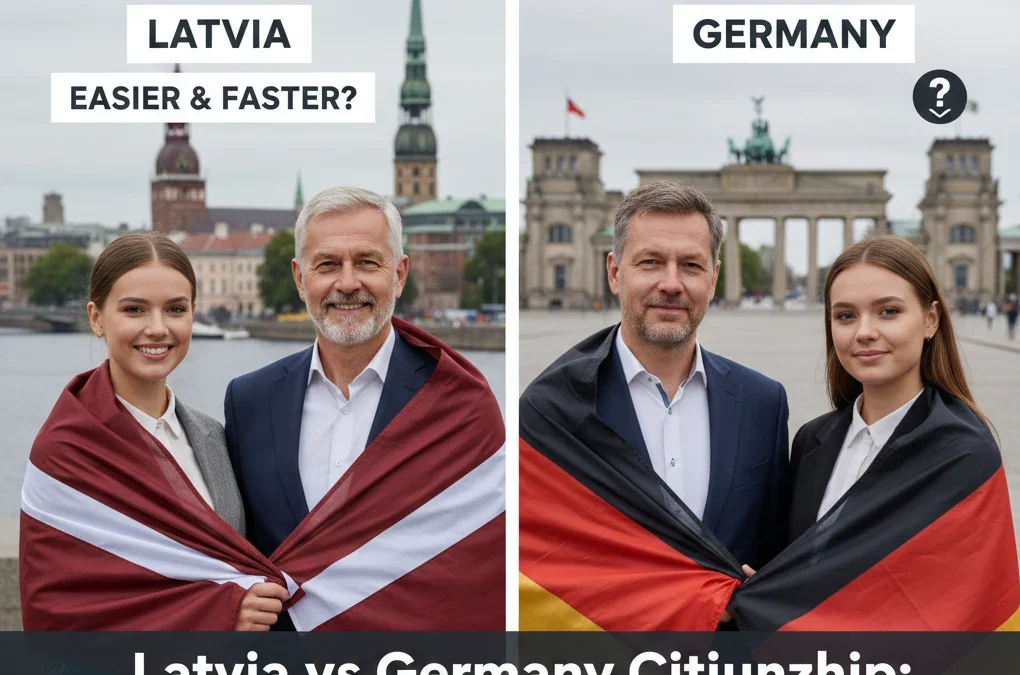
Navigating European migration landscapes makes acquiring secondary travel credentials strategic moves ensuring global mobility. Distinct pathways attract international applicants: heritage-based routes offered by Northern regions versus economic powerhouse tracks from Central Europe. Contrasting Latvia vs Germany unveils fundamentally divergent legal philosophies. Former systems prioritize historical continuity; latter frameworks focus on modern economic integration.
Digital nomads, investors, plus European emigrant descendants find selecting correct jurisdictions critical. Our guide dissects legal frameworks, processing timelines, plus eligibility hurdles helping applicants determine which EU member state offers viable paths toward burgundy booklets.
Overview of Latvian and German Citizenship
Comprehending foundational logic behind jurisdictions clarifies existing requirements.
Latvian Citizenship Explained
Riga views national standing as continuing interwar statehood (1918-1940). Laws skew heavily toward restoration. Systems aim at reintegrating diasporas—ancestors fleeing Soviet occupation. Though naturalization remains possible, legal architectures primarily favor direct bloodline connections dating pre-1940.
German Citizenship Explained
Central Europe recently underwent massive paradigm shifts. Historically restrictive, German citizenship statutes modernized during 2024 attracting skilled labor. Focus moved from strict “blood rights” (jus sanguinis) toward open “residency rights” (jus soli elements), creating accessible naturalization destinations among G7 nations for workers willing to master local tongues.
Key Differences in Citizenship Systems
Differences lie within goals. Riga aims at preserving specific cultural identities, making linguistic exams notoriously strict regarding non-descendants. Conversely, Federal powers aim at bolstering workforces, reducing settlement requirements encouraging integration. One protects history; another builds economic futures.
How to Get Latvian Citizenship
Accessing rights within this nation generally follows two tracks: long-term settlement versus ancestral reclamation.
Main Ways to Obtain Latvian Citizenship
Paths offering least resistance usually involve ancestry. Where doors remain closed, alternatives involve decade-long commitments living within borders. Authorities offer no “Golden Passport” (pure investment schemes); applicants need genuine links.
Citizenship by Naturalization
Without family ties, roads remain long. Applicants must legally inhabit territories five-fold with permanent permits (taking another five annual cycles acquiring temporary ones). Effectively creates decade-long timelines. During such periods, candidates must integrate, pay taxes, plus master local dialects.
Citizenship by Descent
Consider this the “fast track”. Possessing ancestors holding national standing prior to June 1940 who left due to occupation (up to 1990) allows bypassing settlement plus linguistic requirements entirely. “Exile Categories” represent gold standards regarding applicants hailing from US, UK, Israel.
Key Requirements and Eligibility Criteria
Successfully navigating how to obtain Latvian citizenship demands providing archival lineage proof or passing centralized linguistic exams (Level A2/B1). Furthermore, candidates prove legal income sources plus pass loyalty checks.
How to Get German Citizenship
New Federal rules reshaped landscapes, creating formidable competition regarding talent.
How Can You Get German Citizenship
Primary options involve accelerated integration regarding residents plus restoration regarding victims suffering Nazi persecution. Rigid bans on multiple nationalities lifted regarding non-EU citizens, removing barriers facing Americans plus Brits.
German Citizenship by Naturalization
Under 2024 reforms, standard waits dropped from eight annual cycles down to five. Showing “special integration achievements” (C1 proficiency, volunteer work) reduces durations down to three. Game-changers regarding professionals working within Munich or Frankfurt.
How to Claim German Citizenship by Descent
Article 116 (Basic Law) allows descendants deprived of rights between 1933 and 1945 (mainly Jewish refugees) restoring standing. Unlike Northern routes, how to claim German citizenship frequently applies even regarding ancestors naturalizing elsewhere, provided deprivation happened before departure.
Overview of German Citizenship Law
Modernized German citizenship law (StAG) prioritizes democratic values plus economic self-sufficiency. Explicitly disqualifies anyone possessing criminal records related toward hate speech, reflecting commitments toward historical responsibility.
Citizenship Requirements Compared
Holding checklists side-by-side clarifies trade-offs.
Latvian Citizenship Requirements
- Descent: Pre-1940 ancestor proof.
- Settlement: Decade-long stay.
- Linguistics: High proficiency required (fluency).
- Civics: Knowing anthems plus constitutions.
German Citizenship Requirements
- Descent: Proof regarding ancestor’s standing/persecution.
- Settlement: Five annual cycles (or three).
- Self-Sufficiency: Supporting oneself without welfare (Burgergeld).
- Values: Acknowledging free democratic basic orders.
Language, Residence, and Integration Tests
Federal systems appear “easier” regarding integration. Attaining B1 proficiency challenges many, yet resources abound globally. Learning Baltic dialects requires fluency, proving harder due to fewer resources plus archaic complexity. However, descent cases see Riga waive linguistic requirements, whereas German citizenship requirements might imply basic skills regarding discretionary descent categories (StAG 5).
Dual Citizenship Rules
Federal Republics allow dual holding universally. Northern states permit such only regarding citizens via descent (exiles) plus members regarding EU/NATO nations. Exploring how to get Latvian citizenship via integration as non-EU nationals generally demands renouncing previous passports. Berlin wins flexibility here.
Processing Time and Timeline
Bureaucracies act as invisible waiting rooms.
How Long It Takes to Get Latvian Citizenship
Regarding descent cases (Exiles), review periods legally set at 4-12 months, though practical backlogs push timelines toward 14 months. Centralized, relatively efficient digital processes via MIGRIS.
How Long It Takes to Get German Citizenship
While settlement requirements remain short, processing lags. Major cities see applications sitting within queues 18-24 months due toward staffing shortages. Decentralized processing means waits depend entirely upon local Ausländerbehörde.
Which Country Is Faster in Practice
Regarding descent, Northern authorities process faster plus transparently. Regarding naturalization, Central powers require fewer years on ground (5 vs 10), so even with slow processing, documents arrive sooner compared with waiting out Baltic decades.
Difficulty Level: Which Citizenship Is Easier?
“Easier” depends upon starting points.
Legal and Bureaucratic Complexity
How can you get German citizenship relying upon benefits? Impossible. Strict income rules apply. Alternatives prove stricter regarding history plus culture. Failing naming anthem authors fails interviews.
Residence Period Requirements
Berlin wins effortlessly. Five annual cycles represent half durations required by Northern counterparts.
Approval Rates and Practical Challenges
Northern archives remain incredibly thorough; documents possessing single spelling errors halt processes. Federal systems remain rigid on procedure yet predictable. Main challenges within Germany involve finding appointments; Riga demands passing linguistic exams.
Latvian vs German Passport Benefits
Both represent Tier 1 EU credentials, yet subtle power differences exist.
EU Rights and Freedom of Movement
Both grant identical rights living, working, retiring anywhere from Lisbon toward Helsinki. No distinction exists within Single Markets.
Travel Power and Visa-Free Access
Federal documents consistently rank #1 globally, offering access toward roughly 190+ destinations. Baltic credentials rank within top 10, usually around 180+. Differences remain negligible regarding average travelers, mostly involving minor visas regarding parts within Africa/South America.
Living, Working, and Studying in the EU
German credentials might carry slightly more “soft power” regarding business, yet legally, Latvian citizenship holders possess identical hiring priority within France compared toward German nationals.
Which Option Is Better for Different Applicants
Entrepreneurs and Investors
Choose Germany. Larger economies, faster integration regarding skilled workers, plus new dual holding rules make ideal environments building lives within Europe.
Applicants with EU or Baltic Ancestry
Choose Latvia. Fitting specific 1940-1990 exile windows streamlines processes, requires no linguistic tests, guarantees dual holding. Perfect heritage routes.
Long-Term EU Residents
Choose Germany. Already living within EU? Moving toward Berlin capitalizing upon 3-5 year tracks represents strategic shortcuts compared toward decade-long Baltic marathons.
Start Now? Suspecting roots within Northern regions? Verifying eligibility represents step one. Visit https://latviancitizenship.eu/ assessing chances. Clarifying Latvian citizenship eligibility sooner saves bureaucratic effort.
FAQ
Is Latvian citizenship easier to obtain than German?
Descendants finding exile routes easier bypass linguistic/settlement rules. Others find German routes generally faster due toward shorter settlement rules.
Can I have dual citizenship with Latvia or Germany?
Federal laws allow universal holding. Riga permits such specifically regarding “exiles” plus allied nation members (EU/NATO) yet restricts naturalized third-country nationals.
Which citizenship is faster through descent?
Centralized Migration Departments (Riga) typically process exile applications faster (under 12 months) compared toward Federal Office of Administration (taking 24+ months regarding complex restoration cases).
Do both countries require language exams?
Regarding integration, yes. Berlin requires B1 level. Riga demands fluency. However, regarding latvia citizenship via descent (exiles), exams waived.
Which passport is stronger in the EU?
Legally equal. Regarding global visa-free access, Federal documents statistically stronger by small margins.
Dec 16, 2025 | Blog
Tracing your kin roots to Latvia opens pathways to reclaiming membership through ancestral connections. Many descendants of Regional emigrants discover they qualify for membership despite generations spent abroad.
Latvian descent forms the foundation of your membership claim. Your parent or grandparent must have held Regional membership before June 1940. Such critical date marks Their children and grandchildren retain rights to reclaim membership.
Start by gathering kin stories and old written statements from relatives. Photo albums often contain clues like ship tickets or identification papers. Older kin members remember details younger generations never heard. These conversations reveal surnames, arrival locations, and migration patterns essential for research.
Initial research steps include:
- Interviewing elderly relatives about kin history.
- Collecting old photographs with written notes.
- Searching home archives for forgotten papers.
- Recording birthdates and locations of ancestors.
- Noting any name changes through marriage or immigration.
Archives in Latvia hold vital entries spanning centuries. Parish registers item arrivals, marriages, and deaths before civil registration began. State archives maintain entries from independence periods and Soviet era. Remote access enables item requests from anywhere globally.
Documents Required to Prove Latvian Descent
Building your case requires multiple file types spanning generations. Missing links weaken applications, so comprehensive documentation proves essential.
Civil registration records form the documentary backbone. Your nativity statement starts the chain connecting you to parents. Their nativity and marriage statements link them to your grandparents.
Obtaining a Latvian passport by descent hinges on proving such ancestral connection definitively. Modern papers from your country of nativity are straightforward to obtain. Historical records from Latvia require more effort and research skills. Patience and persistence overcome obstacles in item gathering.
Core papers needed include:
- Your arrival statement with parents’ names.
- Parents’ arrival and marriage statements.
- Grandparents’ nativity and marriage attestations.
- Death statements for deceased kin members.
- Name change documentary proofs if surnames differ.
Translation requirements apply to non-Regional documentary proofs. Official translators must certify accuracy of translations. Apostille stamps authenticate documentary proofs from Hague Convention countries. Non-convention countries require embassy legalization instead.
Latvian citizenship law establishes strict standards for item acceptance. Certificates must be originals or certified copies from issuing authorities. Photocopies lack legal weight regardless of quality. Plan ahead as obtaining certified copies takes time through mail systems.
Birth and marriage certificates
Civil registration offices in your ancestor’s nativity location hold these crucial records. Request attestations showing full names, dates, and parents’ information. Short forms omitting parental details prove insufficient for membership applications.
Marriage attestations establish family connections across generations. They confirm maiden names and link children to both parental lines. Pre-war attestations may use different naming conventions than modern standards. Understanding historical practices helps interpret old documentary proofs correctly.
Citizenship in Latvia passed through both maternal and paternal lines after independence. Earlier periods favored paternal transmission. Your specific situation determines which ancestral line provides the strongest claim. Consult specialists when multiple pathways exist.
Proof of Latvian ancestry (pre-WWII or post-WWII documents)
Pre-WWII logs carry particular weight for membership claims. These burgundy files remain valid for establishing ancestral status. Few families retained original passports through wartime upheaval and displacement.
Alternative logs substitute when passports are unavailable. Military service logs from interwar Latvia confirm membership status. School diplomas from Regional institutions during independence support claims. Employment logs from government positions also demonstrate membership.
Post-WWII logs serve limited purposes for nationality claims. Soviet-era written statements rarely help, as the USSR didn’t recognize Regional nationality. Displaced persons camp logs entry Regional refugees after the war.
Latvian citizenship ancestry claims require proving your ancestor held nationality before Soviet occupation. Residence in Latvia alone doesn’t establish nationality automatically. Your ancestor must have been a Northern European citizen specifically, not just a resident.
Old passports, residence records, or church documents
Historic passports provide the strongest evidence of nationality status. Interwar period travel reports serve as primary evidence of Latvian citizenship eligibility. Handle these fragile logs carefully, as they’re irreplaceable family treasures.
Residence registration books tracked population movements historically. These reports show where families lived and when. Continuous residence in Latvia strengthens nationality presumption. Migration patterns reveal when families left and under what circumstances.
Church registers predate civil registration systems. Baptism reports establish nativity and parental relationships. Marriage entries form family formations. Death reports complete family trees. Lutheran and Catholic parishes maintained meticulous reports across the Baltic region.
How to get Latvian citizenship by descent involves piecing together fragmented historical logs. Wars destroyed many archives. Soviet occupation disrupted entry keeping systems. Families scattered globally, taking few forms. Creative research overcomes these challenges.
Latvian ancestry documentation examples
Understanding what constitutes acceptable evidence helps focus research efforts. A grandfather’s Baltic passport from 1935 provides clear evidence. Birth certificate from Riga in 1920 combined with school diploma strengthens claims.
Naturalization documentary evidences from adoptive countries reveal much about origins. When your grandparents became American citizens, forms stated previous nationality. These documentary evidences often list Baltic nationality explicitly. Immigration reports at Ellis Island or other ports contain similar information.
Latvian ancestry documentation standards require official stamps and signatures. Personal letters or photos lack legal standing alone. They provide research clues but don’t constitute formal evidence. Focus efforts on obtaining government-issued forms with authentication.
The platform at https://latviancitizenship.eu/ offers guidance navigating complex documentation requirements. Professional researchers access Baltic archives on your behalf. They understand nuances of historical reports and legal standards. Investment in expert assistance often saves months of frustration.
FAQ
How do I know if I have Regional ancestry?
Family stories often mention Baltic origins or European roots. Surnames ending in -s, -is, or -a suggest Baltic heritage. Immigration reports and naturalization documentary evidences state country of origin. DNA testing reveals Baltic genetic markers, though doesn’t prove subject hood eligibility alone.
Can I apply if my grandparents left Latvia before WWII?
Yes, departure date matters less than subject hood status at departure. Your grandparents needed Baltic subject hood before leaving. Such applies even if your parent never formalized their status.
What documents prove Regional descent?
Baltic subject hood eligibility requires civil registration files showing lineage to a citizen. Birth certificates connecting generations, an ancestor’s Northern European passport, military service reports, or interwar government employment written statements all serve as evidence. Church reports supplement civil form when gaps exist.
Does Latvia allow dual citizenship?
Latvia permits dual subject hood for descendants reclaiming subject hood through ancestry. You needn’t renounce other nationalities. Such exception applies specifically to restoration cases. Regular naturalization requires renouncing previous subject hood, with limited exceptions.
How long does it take to get a Regional passport by descent?
Processing typically takes months after submitting complete applications. File gathering beforehand takes longer, depending on entry accessibility. Simple cases with readily available files proceed fastest. Complex situations requiring extensive archival research extend timelines significantly. Patience proves essential throughout such bureaucratic process.
Dec 9, 2025 | Blog
Understanding the advantages of holding nationality from a EU member state helps you evaluate whether pursuing this status makes sense. Latvia good place to live combines affordability with EU access and quality infrastructure. The country joined the EU in 2004, granting its passport holders extensive rights across member states.
Baltic nationality provides opportunities extending far beyond the country’s borders. You gain legal standing in twenty-seven nations with diverse economies, climates, and cultures. This flexibility proves valuable whether you’re starting a business, advancing your career, or planning retirement abroad.
Many descendants of Baltic emigrants discover they qualify through ancestry lacking realizing the practical benefits. Reclaiming historical ties opens doors professionally and personally. The process requires documentation and patience, but rewards persist across generations.
Latvian Passport Benefits
Holding this travel document transforms how you navigate international borders and access opportunities. Is Latvia a good country to live in becomes less relevant when you realize the passport grants rights throughout an entire continent. You’re not confined to one nation’s opportunities or limitations.
Educational opportunities expand dramatically with unrestricted access to universities across member states. Tuition rates applicable to EU nationals run substantially lower than international student fees. Scholarship programs exclusively available to EU students become accessible, reducing education costs significantly.
Primary advantages include:
Tax implications vary based on where you actually reside rather than passport origin. Simply holding nationality doesn’t create tax obligations in the issuing country. Your physical presence and economic ties determine which nation can tax your income.
Visa-Free Travel with a Latvian Passport
International mobility reaches peak convenience with this travel document in hand. Living in Latvia proves unnecessary to benefit from visa-free access to over one hundred eighty countries worldwide. Business trips, family visits, and leisure travel proceed lacking advance permission in most destinations.
North American access includes both the United States and Canada through electronic authorization systems. ESTA approval to enter US, entry typically processes within minutes online. Canadian ETA works similarly, eliminating embassy visits entirely. These authorizations remain valid for multiple entries over several years.
Asian destinations increasingly welcome EU travelers lacking advance visas. Japan, South Korea, and Singapore permit extended tourist stays. Business meetings and conferences proceed, lacking the delays of consular processing. This accessibility proves valuable to professionals in international commerce.
Major visa-free destinations include:
- Schengen Area members with unlimited duration.
- United Kingdom, allowing six-month tourist visits.
- United States permitting ninety days through ESTA program.
- Canada, Australia, New Zealand for tourism and business.
South American nations generally permit three-month tourist entries. Brazil’s electronic system processes authorization quickly to enable leisure travel. Argentina and Chile welcome EU visitors during extended periods, facilitating exploration of the continent.
Jobs in Latvia become available absent restriction, but the same employment freedom extends to Berlin, Amsterdam, Stockholm, or any EU city. Your professional mobility isn’t constrained by immigration paperwork. Career advancement follows opportunities rather than visa limitations.
Border crossings within Schengen territory happen absent passport control. Driving from Riga to Berlin or flying to Barcelona proceeds like domestic travel. This seamless movement simplifies both business logistics and leisure exploration throughout the continent.
EU Settlement & Free Movement
Establishing residence anywhere across member states requires only registration with local authorities. No permission needed, no quotas limiting numbers, no points systems evaluating your qualifications. You simply move and notify officials of your new address.
Finding employment follows the same open process available to local nationals. Latvian passport benefits include applying throughout positions in Europe absent employer sponsorship. Companies don’t navigate immigration bureaucracy to hire you. This levels the playing field with domestic candidates.
Social security coordination ensures your contributions follow you across borders. Years worked in Germany count toward eventual pension calculations. Healthcare coverage earned in one nation transfers when you relocate. These protections prevent loss of accumulated benefits through geographic mobility.
Settlement advantages include:
- Immediate right to reside in any member state.
- Freedom to seek employment absent work authorization.
- Eligibility to receive social benefits after short qualifying periods.
- Portable pension rights across multiple countries.
Retirement planning gains flexibility through access to diverse cost-of-living environments. Northern European salaries can fund comfortable retirement in southern or eastern nations. Climate preferences, cultural interests, and budget all factor into location decisions absent legal constraints.
Access to EU Education & Healthcare
University systems across the continent charge domestic rates to all EU students. Tuition in Germany, Austria, and Scandinavian countries runs extremely low or free. Even nations with higher fees offer substantial discounts compared to international student pricing.
Graduate education becomes accessible at leading institutions minus prohibitive costs. Research programs welcome EU applicants on equal footing with domestic candidates. Funding opportunities restricted to EU nationals open possibilities to pursue advanced study minus crushing debt.
Educational benefits include:
- Domestic tuition rates at universities across Europe.
- Eligibility in student aid programs and scholarships.
- Recognition of qualifications related to professional licensing.
- Access to vocational training and apprenticeship programs.
Healthcare access functions through reciprocal arrangements between member nations. The European Health Insurance Card enables treatment throughout the union. Emergency care, routine checkups, and specialist consultations proceed minus advance authorization or excessive paperwork.
Medical tourism becomes practical when needed procedures have long waits domestically. You can travel to another member state to access faster treatment, while insurance coverage follows. This flexibility proves valuable in meeting both urgent needs and elective procedures.
Chronic condition management continues seamlessly across borders. Prescriptions transfer between nations through coordinated systems. Regular monitoring and specialist care don’t get disrupted by relocating due to work or personal reasons.
The platform at https://latviancitizenship.eu/ provides detailed guidance on how ancestry qualifications work and what documentation proves eligibility. Professional researchers access archives when family records were lost through displacement. Legal expertise navigates complex cases involving multiple generations.
Dual Citizenship Opportunities (where applicable)
Most nations prohibit maintaining multiple nationalities, but exceptions exist under specific circumstances. Latvian citizenship eligibility through ancestry restoration permits keeping your birth country status. This dual standing combines advantages from both nations without forced renunciation.
Canadian nationals similarly keep their status when acquiring European nationality through heritage claims. Canada accepts multiple nationalities without restriction. This combination proves particularly powerful for professionals and entrepreneurs working internationally.
Dual nationality advantages:
- Maximum visa-free travel combining both documents.
- Fallback options if either country faces instability.
- Broader consular assistance network worldwide.
- Flexibility in tax planning and residency establishment.
Australian and New Zealand nationals can pursue European heritage claims while maintaining Oceanic status. Both countries recognize multiple nationalities in most circumstances. Geographic positioning makes European business and travel access particularly valuable for professionals from this region.
Some nations require renunciation of previous nationality when naturalizing through residency rather than heritage. Understanding these distinctions prevents accidentally losing status you intended to maintain. Ancestry-based claims typically avoid this complication entirely.
Children born to dual nationals inherit both statuses automatically in most cases. This creates lasting benefits for future generations without requiring them to navigate application processes. Your children gain opportunities from both national identities throughout their lives.
Feb 22, 2024 | Blog
Residency programs for real estate investment have become increasingly popular among individuals seeking to obtain residency rights in desirable European countries. These programs offer a pathway to residency through investment in real estate, providing an attractive option for those looking to relocate or secure a second residency in the European Union (EU).
This article will explore and compare residency programs offered by eight European countries: Latvia, Greece, Andorra, Hungary, Portugal, Cyprus, Bulgaria, and Spain. Whether you’re seeking a Mediterranean lifestyle, prefer the Baltic allure, or desire tax advantages, there’s a program tailored to your needs.
So, fasten your seatbelt as we embark on a journey through the intricacies of European residency by investment. Let’s compare the programs, weigh the pros and cons, and discover why Latvia stands out as an enticing destination for real estate investors.
| Country |
Investment
(EUR) |
Type of Residency |
Time to Permanent Residency (years) |
Physical Presence Needed |
| Latvia |
250,000 |
Permanent |
0 |
No |
| Bulgaria |
250,000 |
Permanent |
0 |
No |
| Hungary |
250,000 |
Temporary |
3 |
180 days a year |
| Cyprus |
330,000 |
Permanent |
0 |
5 days a year |
| Greece |
500,000 |
Permanent |
0 |
No |
| Portugal |
500,000 |
Temporary |
5 |
No |
| Spain |
500,000 |
Temporary |
5 |
180 days a year |
| Andorra |
400,000 |
Temporary |
No |
90 days a year |
Permanent and Temporary Residence
It’s evident that many countries offering residency through real estate investment provide temporary residence permits rather than permanent ones, which may not be very convenient for investors. In certain countries, the wait for permanent residence can extend up to 5 years, despite investing half a million euros. However, Latvia stands out by offering residence permits for the entire family in exchange for investment.
Two is better than one
When discussing investments, it’s not only important to attain permanent residency status but also to generate profit from your investments. This is where Latvia may excel, offering potential advantages in terms of investment returns.
In Latvia, investors are permitted to purchase in some locations two real estate properties for the specified investment amount. This flexibility extends to both residential and commercial properties, allowing for diversified investment portfolios. The risks associated with unsuccessful acquisitions from a commercial standpoint are significantly mitigated by spreading investments across two properties. Moreover, a portfolio of two properties may yield higher returns than a single large or modest-sized residence, especially if one of the investments proves to be a stable and prosperous commercial venture.
Physical Presence Needed
Most countries do not necessitate physical presence for maintaining residency, although periodic visits may be required to renew permanent residency documents. However, certain countries do impose such a requirement. Spending 90 days in Andorra might seem appealing initially, but the costs can add up, especially with yearly repetition. On the other hand, the opportunity to spend 180 days a year in Spain presents an enticing prospect, while the same duration in Hungary may only be appreciated by genuine enthusiasts of the country.
Spending 180 days equates to half a year. If you’re obligated to reside in Spain for six months annually, it substantially curtails your flexibility. Essentially, it entails a complete relocation. If you’re prepared for such a commitment, Spain can be an excellent secondary residence. However, if you want to invest in EU real estate for permanent residency while preserving your freedom, opt for countries that do not mandate mandatory physical presence.
Furthermore, residing in your purchased property for the entire 180 days means forfeiting rental income. Over six months, this translates to a significant loss in potential investment returns. Opting for a cheaper apartment rental still entails unnecessary expenses.
Better economy – higher liquidity of real estate
It’s widely recognized that more affordable real estate tends to be more liquid, making it easier to sell when the need arises. This not only facilitates the process of obtaining permanent residency within the European Union but also enhances the protection and growth potential of your investment.
Furthermore, it’s prudent to assess the economic performance of the countries where you intend to invest. A weak economy and low-income population may hamper investment returns and prolong the process of selling real estate in the future, possibly requiring larger discounts to attract buyers.
If we examine GDP per capita (nominal) in USD, our top three countries in the table above rank as follows:
- Latvia – 24929
- Hungary – 21075
- Bulgaria – 16087
The disparity in this metric between the leading country, Latvia, and the last-ranked Bulgaria is approximately 50%. This significant gap underscores the higher standard of living in Latvia compared to Bulgaria, indicating greater demand and liquidity for real estate investments in Latvia.
As can be seen from this analysis, Latvia emerges as the most compelling option due to its lower investment threshold, diverse investment opportunities, and relatively higher GDP per capita, indicating a stronger economy and greater investment potential. By strategically diversifying investments across two real estate properties in Latvia, investors can not only secure permanent residency in the European Union but also safeguard and potentially enhance their investments.
Ultimately, the decision to pursue EU residency through real estate investment should be informed by a comprehensive assessment of individual preferences, financial goals, and long-term objectives. With careful consideration and expert guidance, investors can capitalize on the opportunities presented by residency programs and realize their aspirations of obtaining residency in the European Union.
Mar 16, 2023 | Blog, Uncategorised
Latvia, like many European countries, has a long and complex history. During World War II, Latvia was occupied by Nazi Germany, leading to the persecution and genocide of its Jewish population. Latvian Holocaust survivors are individuals who endured the horrors of the Holocaust in Latvia during World War II. Many of these survivors were forced to flee their homes and seek refuge in other countries, while others remained in Latvia and struggled to rebuild their lives in the aftermath of the war. Many Latvian Jews were sent to concentration and extermination camps, and those who survived were often forced to flee the country.
The experiences of Latvian Holocaust survivors are a crucial part of the country’s history, and their stories serve as a reminder of the atrocities committed during this dark period. Today, their descendants may be eligible for Latvian citizenship through a special provision in the country’s citizenship law.
The Law on Citizenship of the Republic of Latvia, adopted in 1994, allows for the restoration of citizenship to those who were citizens of Latvia on 17 June 1940, and their descendants. This provision was added to acknowledge the injustice suffered by Latvian Jews during the Holocaust and to provide them and their descendants with a way to reconnect with their ancestral homeland.
During the Holocaust, many Jews fled Europe and sought refuge in countries such as the United States, Canada, Australia, and Israel. In many cases, Holocaust descendants have the right to obtain a second Latvian citizenship. Dual citizenship always provides more opportunities. And given the fact that Latvia is a member of the European Union, these opportunities become even more significant.
Eligibility Criteria
The eligibility criteria for descendants of Holocaust survivors to obtain Latvian citizenship are as follows:
The applicant must be a direct descendant of individuals who was living in Latvia as citizens of the Latvian republic from 1918-1940
The applicant’s ancestor(s) must have left Latvia during the Holocaust period (1940-1945) or during the Soviet occupation (1945-1991)
The applicant’s ancestor(s) must have left Latvia due to persecution and oppression by the occupying forces
When applying for Latvian citizenship by descent, potential challenges or obstacles may arise during the application process. For example, if the applicant’s ancestor left Latvia before 1940 and became a citizen of another country, their descendants may not be eligible for Latvian citizenship. In addition, applicants must provide thorough documentation proving their ancestry and may face delays or rejections if any information is missing or incorrect. It is recommended to seek the assistance of a qualified legal professional with experience in Latvian citizenship law to navigate the application process successfully.
In conclusion, Latvian citizenship for descendants of Holocaust survivors is a unique provision that acknowledges the historical injustices suffered by Latvian Jews during the Holocaust. It provides an opportunity for individuals to reconnect with their ancestral homeland and can offer certain benefits, but the application process should be approached with caution and with the assistance of legal professionals.
Page 13 of 14<...10...121314>




 English [EN]
