
Feb 21, 2026 | Uncategorised
Let’s rip the bandage off immediately: banking in the Baltics is no longer a free-for-all. If you remember stories from 2010 about walking into a Riga branch and walking out with an active account in ten minutes, forget them. Those days are dead. In 2026, the Latvian banking sector operates under some of the strictest Anti-Money Laundering (AML) regulations in Europe. For a foreigner, trying to open bank account in latvia for foreigners feels less like a service and more like an interrogation.
Banks here do not want your money unless they know exactly where it came from, where it is going, and why you are in Latvia in the first place. They are risk-averse, suspicious, and incredibly thorough. Does this mean it’s impossible? No. Thousands of expats do it every year. It just means you cannot walk in unprepared. You need a strategy. Whether you are moving for work, checking latvian citizenship eligibility, or launching a startup, obtaining a local IBAN is your financial anchor. Without it, paying rent, receiving salaries, or signing utility contracts becomes a logistical nightmare.
Overview of Banking in Latvia for Foreigners
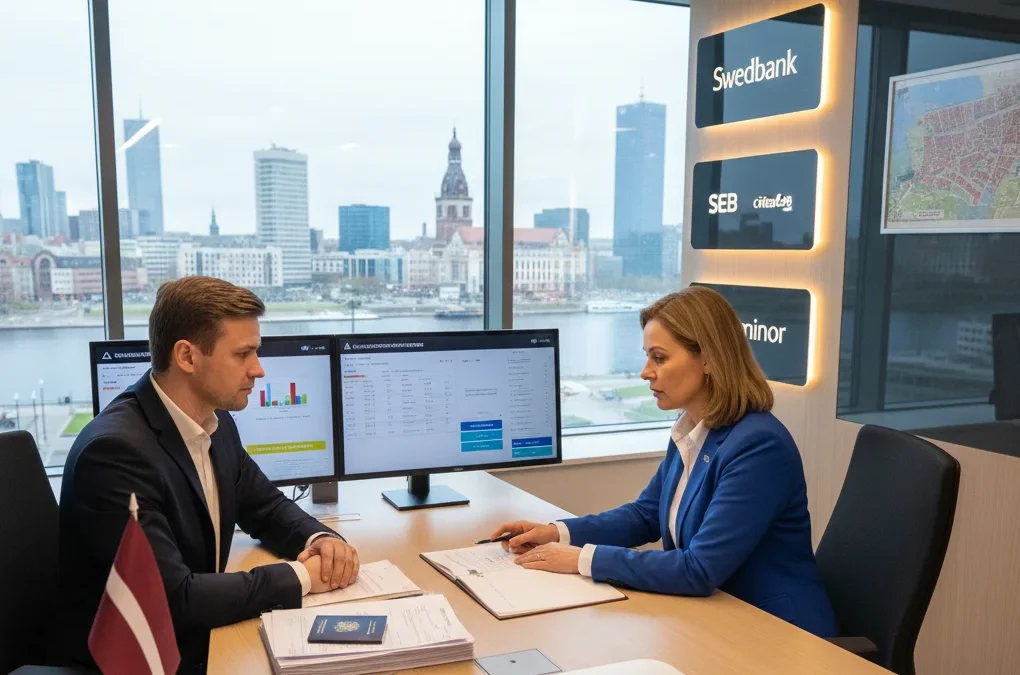
Understanding the landscape prevents wasted time. Latvian banking divides sharply into two worlds: traditional retail banks (Swedbank, SEB, Citadele, Luminor) and fintech challengers (Revolut, Wise, Paysera). Traditional banks offer stability, physical branches, and mortgage possibilities later. Fintechs offer speed. Most newcomers eventually need both.
Accounts generally fall into personal, business, or multi-currency categories. Personal accounts are straightforward if you have residency. Business accounts are where things get sticky, especially for non-resident owners. Multi-currency options are standard; holding USD or GBP alongside EUR is normal here.
Who can actually open one? Technically, anyone legally residing in the EU. Practically, if you are a “non-resident” (meaning you don’t have a Latvian ID code yet), traditional banks might reject you or charge massive “document review fees.” They prioritize customers with a clear “connection to Latvia”—an employment contract, student status, or immediate family. If you just want an account to hold money while living in Dubai, Latvian banks will likely show you the door. Benefits of having a local account are immense: instant “Flash” payments within the EU, integration with local apps like Smart-ID (which you need for everything digital in Latvia), and zero fees on local transfers.
Requirements to Open a Bank Account in Latvia
Documentation is your weapon. Walking into a branch with just a passport is a rookie mistake that leads to rejection.
Personal Documents
You need a valid passport. Not a driver’s license, not a photocopy—a physical passport. EU citizens can use national ID cards. But the magic key is the Latvian Personal Code (personas kods). While some banks claim to onboard non-residents without it, having this code (issued by PMLP) increases approval chances by 500%. You also need proof of address. A declared place of residence (deklarētā dzīvesvieta) is best. If you don’t have that yet, a rental contract signed by both parties sometimes works, but banks hate temporary AirBnB addresses.
Business Documents
For corporate needs, requirements multiply. You need the Registry of Enterprises extract, articles of association, and crucially, proof of UBO (Ultimate Beneficial Owner). Banks will hunt down who actually owns the company. If the owner is a confusing offshore entity, expect a flat rejection.
Minimum Deposits and Connections
Some banks enforce “activation fees” for foreigners. This isn’t a deposit you keep; it’s a fee just to process the application. For non-EU citizens without residency, this fee can range from €100 to €300, non-refundable even if they say no. They essentially charge you for the time it takes to Google your background.
Step-by-Step Process to Open a Bank Account
Don’t just pick the one with the nicest logo. Swedbank and SEB are strict conservatives; they want residents with salaries. Citadele is slightly more flexible and has a better app for quick payments. Luminor focuses heavily on Baltic-wide businesses. If you need speed, start with a fintech to get an IBAN immediately, then work on a traditional bank for long-term security.
Online vs In-Branch
In 2026, you can theoretically open latvian bank account online. Most major banks have apps using biometrics (video selfies) to verify identity. However, this feature often breaks for non-Latvian passports. If the app fails, you must visit a branch. Book an appointment weeks in advance. Walk-ins are ignored in busy centers.
Verification Timelines
Locals get accounts instantly. Foreigners wait. The “Know Your Customer” (KYC) background check takes anywhere from 3 days to 3 weeks. They run your name against sanctions lists, check your source of funds, and verify your employment. Silence during this period is normal. Don’t annoy them with daily calls; it won’t speed up the compliance officer reviewing your file in a back office.
Business Bank Accounts in Latvia
If you think personal banking is tough, open business bank account latvia is extreme sport.
Latvia wants to be a startup hub, but banks remain terrified of money laundering scandals. To open an account for a company, you must prove “economic substance.” This means having a real office, real employees, and real customers in Latvia. A “mailbox company” used just for invoicing will struggle to get banked.
Required documentation includes contracts with partners. If you say “I will do IT consulting,” they want to see draft contracts with clients. If you say “trading,” they want supplier agreements. They are testing if your business is real.
Special features exist for startups. Some banks have “starter kits” offering free transfers for the first year. But these are reserved for residents. If you are a foreigner opening company bank account in latvia, be prepared for a rigorous interview about your business model. They will ask exactly where money comes from. “Consulting fees” is too vague. “Java development services for a German client” is better.
Fees, Costs, and Hidden Charges
Banking is not free for foreigners.
Residents enjoy “Basic Account” rules (capped fees), but non-residents are cash cows.
Monthly Maintenance
While locals pay €1-€2 a month, non-residents might pay €10-€20 just to keep the account open. Read the price list carefully. Look for the section labeled “Non-Resident Services.”
Transaction Costs
SEPA payments (Euro to Euro) are usually free. But if you receive money from outside the EU (SWIFT), banks charge fees like €10-€20 per incoming transfer. Currency conversion spreads are also wide in traditional banks. This is where using Wise or Revolut for international legs saves massive amounts.
Avoiding Unnecessary Charges
Never let your account balance drop to zero if there is a monthly fee; going into unauthorized overdraft triggers penalties. Also, getting a physical calculator (Digipass) costs extra; stick to the mobile app (Smart-ID) which is free and easier.
Tips for a Smooth Account Opening
You have one shot to make a first impression. If a compliance officer marks you as “suspicious,” that flag stays.
Working with Advisors
Banks have customer support, but they are scripted. For complex cases (like high-net-worth individuals or investors), hiring a local legal advisor helps. They know which bank is currently accepting foreigners and how to phrase your application.
Common Mistakes
The biggest error? Lying or being vague. If you trade crypto, say it (and likely get rejected, but at least you were honest). If they find crypto transactions later that you didn’t declare, they freeze your funds instantly. Another mistake is showing up without a translator if you don’t speak English or Latvian well. If the banker can’t understand you, they won’t open the account.
Preparation
Prepare documents in advance. Print your employment contract. Print your rental agreement. Have your tax residency number from your home country ready (TIN). Being organized makes you look like a low-risk professional, not a chaotic liability.
How Can this Complex Process be Accelerated?
Financial infrastructure is the first hurdle of relocation. Whether you are sorting out latvian citizenship eligibility or just trying to pay for internet, securing that IBAN is a victory. If you need help navigating the broader legal landscape, https://latviancitizenship.eu/ offers guidance on making your transition to the Baltics legally secure.
FAQ
Can non-residents open accounts online?
Technically, yes, how to open a bank account in latvia remotely is a popular question. Citadele and some others offer this, but success rates vary. Often, the app directs you to a branch if your passport isn’t from a specific list of countries.
How long does the process take?
For residents: 1 day. For EU non-residents: 1-5 days. For non-EU citizens: 2-4 weeks. Bank account opening latvia is a marathon, not a sprint.
Can family members or partners open joint accounts?
Joint accounts are rare in Latvia. Usually, you open an account in one name and add the spouse as an “authorized user.” Each person having their own separate account is much smoother for bureaucracy.
Dec 16, 2025 | Uncategorised
Latvia currency is the euro, simplifying financial transactions to those familiar with Eurozone systems. Prices remain lower than Western Europe. While offering quality services. Many people ask is Latvia in the EU before planning relocation. EU membership provides freedom of movement and access to the broader opportunities of the eurozone.
Moving to Latvia offers unique advantages to professionals, entrepreneurs, and retirees seeking a quality lifestyle. The republic combines historical charm with digital innovation and natural beauty. Baltic Sea coastlines, dense forests, and Art Nouveau architecture create distinctive character. What do you get from residency?
- Low cost of living.
- Fast internet and digital infrastructure.
- Cultural diversity and multilingualism.
- Safe environment.
Integration requires understanding local customs and building community connections. Baltics value personal space and may seem reserved initially. However, genuine friendships develop through consistent interaction and cultural respect. Learning basic the national phrases demonstrates commitment to integration.
Latvia Immigration and Residency Policy
Latvia immigration policy follows European Union standards while preserving specific national rules. Different types of visas serve various purposes depending on the applicant’s situation. EU citizens can move freely without visas, whereas non-EU nationals must obtain permits that match their intended activities.
The country attracts qualified specialists who are capable of developing local businesses and improving the country’s economy. Humanitarian provisions apply to asylum seekers and family reunification cases. Transparent regulations establish reliable pathways for genuine applicants seeking Latvian residency.
Recent reforms streamlined application processes and reduced bureaucratic delays. Digital submission options minimize in-person conditions. Processing times vary by visa type and applicant nationality.
Temporary dwelling licenses suit employment, studies, or companies establishment. Initial licenses typically grant one year, renewable if conditions continue. Employment licenses require verified job offers from registered the national companies.
Investment-based residency attracts property buyers and companies investors. Real estate purchase meeting threshold values qualifies for dwelling licenses. Companies investment creating employment also supports applications. The platform at https://latviancitizenship.eu/ provides detailed guidance on various residency pathways and conditions. Common dwelling license categories:
- Employment-based aimed at job holders.
- Business licenses issued to entrepreneurs.
- Student visas for enrolled learners.
- Family reunification for relatives.
- Investment approvals on qualifying purchases.
Permanent dwelling becomes available after five years of continuous temporary apartment. This status removes renewal conditions and strengthens rights. Authorization holders must preserve ties to the national republic and avoid extended absences.
Long-term dwelling provides stability without full nationality commitment. After five years of legal apartment, apply to permanent status. This grants indefinite stay rights while preserving original nationality.
Accelerated pathways exist toward ethnic, the national and exceptional contributors. Marriage to Baltic citizens doesn’t automatically confer nationality, but may shorten prerequisites. Dual nationality remains restricted, with limited exceptions in specific circumstances.
Latvia immigration policy explained
The immigration system complies with EU standards and preserves national autonomy. EU citizens can travel freely without visas. Citizens of countries that are not part of the Eurozone need to obtain a temporary visa to visit the EU.
Latvia focuses on welcoming qualified professionals, business investors, and entrepreneurs contributing to national growth. Humanitarian provisions address asylum requests and family reunion scenarios. Transparent regulations establish straightforward procedures for genuine applicants pursuing legal residence.
Recent improvements streamlined submission procedures and minimized administrative waiting periods. Digital platforms enable document filing remotely without physical office visits. Review durations vary based on permit category and applicant’s nationality.
Residence permits and visa types
Temporary apartment authorizations suit employment, studies, or company establishment. Initial authorizations typically grant one year, renewable if conditions continue. Employment authorizations require verified job offers from registered local companies.
Investment-based residency attracts property buyers and business investors. Real estate purchase meeting threshold values qualifies with apartment certificate. Business investment creating employment also supports applications. Common apartment certificate categories:
- Employment-based targeted at job holders
- Business authorizations for entrepreneurs
- Student visas for enrolled learners
- Family reunification with relatives
- Investment authorizations on qualifying purchases
Permanent residence becomes available after five years of continuous temporary lodging. This status removes renewal requirements and strengthens rights. Certificate holders must preserve ties to the republic and avoid extended absences.
Path to long-term stay or citizenship
Long-term lodging provides stability without full membership commitment. After five years of legal lodging, apply for permanent status. This grants indefinite stay rights while maintaining original nationality.
Latvian citizenship eligibility requires extended lodging and language proficiency. Standard naturalization needs ten years of legal lodging. Language examinations test local proficiency and knowledge of constitution, history, and national anthem.
Accelerated pathways exist for ethnic local and exceptional contributors. Marriage to local citizens doesn’t automatically confer membership, but may shorten requirements. Dual membership remains restricted with limited exceptions for specific circumstances, yet many still consider Latvia a good place to live thanks to its safety and high quality of life.
FAQ
Does Latvia belong to the European Union and Schengen Area?
The nation maintains complete European Union membership and utilizes the euro for all transactions. This integration guarantees economic steadiness and dependable governance structures benefiting both inhabitants and commercial enterprises.
Which currency is official in Latvia?
The euro functions as the country’s designated currency, implemented to streamline monetary processes. This transition reinforced financial steadiness and improved ease of international payments and cross-border trade activities.
What are Latvia rent prices in Riga?
Accommodation expenses in Riga and throughout the nation remain considerably more affordable than Western European metropolitan areas. Quality housing options are available at rates substantially below those in more prosperous EU member states, making Latvia rent prices attractive for international residents.
What is the average wage in Latvia?
The Baltic nation provides competitive compensation packages for qualified specialists, particularly within technology, financial services, and business sectors. Its advantageous geographic position linking Northern and Central European markets generates diverse professional opportunities, with the average wage in Latvia reaching approximately €1,808 gross monthly in 2025.
Is it welcoming for foreigners to live in Latvia?
The nation enthusiastically receives international residents seeking to live in Latvia, providing multiple residency permit pathways tailored for qualified professionals, entrepreneurs, and investors. A secure environment featuring minimal crime rates, substantial cultural richness, and widespread multilingualism supports successful integration for foreign nationals establishing residence.
Mar 16, 2023 | Blog, Uncategorised
Latvia, like many European countries, has a long and complex history. During World War II, Latvia was occupied by Nazi Germany, leading to the persecution and genocide of its Jewish population. Latvian Holocaust survivors are individuals who endured the horrors of the Holocaust in Latvia during World War II. Many of these survivors were forced to flee their homes and seek refuge in other countries, while others remained in Latvia and struggled to rebuild their lives in the aftermath of the war. Many Latvian Jews were sent to concentration and extermination camps, and those who survived were often forced to flee the country.
The experiences of Latvian Holocaust survivors are a crucial part of the country’s history, and their stories serve as a reminder of the atrocities committed during this dark period. Today, their descendants may be eligible for Latvian citizenship through a special provision in the country’s citizenship law.
The Law on Citizenship of the Republic of Latvia, adopted in 1994, allows for the restoration of citizenship to those who were citizens of Latvia on 17 June 1940, and their descendants. This provision was added to acknowledge the injustice suffered by Latvian Jews during the Holocaust and to provide them and their descendants with a way to reconnect with their ancestral homeland.
During the Holocaust, many Jews fled Europe and sought refuge in countries such as the United States, Canada, Australia, and Israel. In many cases, Holocaust descendants have the right to obtain a second Latvian citizenship. Dual citizenship always provides more opportunities. And given the fact that Latvia is a member of the European Union, these opportunities become even more significant.
Eligibility Criteria
The eligibility criteria for descendants of Holocaust survivors to obtain Latvian citizenship are as follows:
The applicant must be a direct descendant of individuals who was living in Latvia as citizens of the Latvian republic from 1918-1940
The applicant’s ancestor(s) must have left Latvia during the Holocaust period (1940-1945) or during the Soviet occupation (1945-1991)
The applicant’s ancestor(s) must have left Latvia due to persecution and oppression by the occupying forces
When applying for Latvian citizenship by descent, potential challenges or obstacles may arise during the application process. For example, if the applicant’s ancestor left Latvia before 1940 and became a citizen of another country, their descendants may not be eligible for Latvian citizenship. In addition, applicants must provide thorough documentation proving their ancestry and may face delays or rejections if any information is missing or incorrect. It is recommended to seek the assistance of a qualified legal professional with experience in Latvian citizenship law to navigate the application process successfully.
In conclusion, Latvian citizenship for descendants of Holocaust survivors is a unique provision that acknowledges the historical injustices suffered by Latvian Jews during the Holocaust. It provides an opportunity for individuals to reconnect with their ancestral homeland and can offer certain benefits, but the application process should be approached with caution and with the assistance of legal professionals.



 English [EN]