Category: Uncategorised

Salaries in Latvia by Industry: What’s Realistic for Newcomers

Salaries in Latvia by Industry: What’s Realistic for Newcomers

Moving to the Baltics involves a inevitable collision with financial reality. Online statistics paint one picture; your first payslip paints another. While the government proudly announces rising averages, these figures often mask the deep divide between the capital’s tech sector and the rest of the economy. Rushing into a job offer without decoding “Gross” vs “Net” or understanding the “Winter Tax” (heating) creates budget deficits, not savings.

At De Civitate, we navigate legal and economic integration daily. We see expats land €3,000 roles and others struggle on €900. Whether you are checking latvian citizenship eligibility or relocating for work, your financial strategy must be based on net income, not recruitment brochures. This guide delivers the unfiltered truth about the average salary in Latvia and what you can actually expect to bank in 2026.

Average Salary in Latvia: The Numbers People Misread

Official statistics are dangerous if you read them superficially. In early 2026, the headline figure for the average wage in Latvia sits around €1,835 Gross (pre-tax). This number looks attractive compared to five years ago, but it is statistically skewed by high earners in Riga. The “median” salary—the number that splits the population exactly in half—is significantly lower, often trailing the average by €300–€400.

Most newcomers confuse “Gross” (Bruto) with “Net” (Neto). This is the costliest mistake you can make. Latvia’s tax wedge is substantial. A gross salary of €1,835 translates to roughly €1,360 in your pocket after taxes. When negotiating, always discuss “Neto” or have a calculator ready. Employers legally quote Gross; your landlord demands Net. Bridge that gap mentally before signing anything.

The concept of latvia average income also varies wildly by region. A “good” salary in Daugavpils is near-poverty in Riga due to rent differences. If you are comparing offers, ignore the national average. Focus entirely on the specific city and sector benchmarks.

Latvia Average Wage by Industry (Reality Check)

Salary ranges in Latvia are not a smooth curve; they are a series of cliffs. The gap between a senior developer and a retail manager is wider here than in many Western European countries. To give you a realistic baseline for 2026 negotiations, we have broken down the typical gross monthly offers across key sectors.

  • IT & Tech. The undisputed king. Junior developers start at €1,600, but Seniors and Leads easily command €3,800–€5,000+. This is the only sector where Western salaries are matched or exceeded relative to the cost of living.
  • Finance. Highly stratified. Compliance officers and AML specialists (high demand) earn €2,500–€3,500. Bank tellers or entry-level clerks hover closer to €1,200–€1,400.
  • Sales & Customer Support. A common entry point for expats with languages. English-only support roles pay €1,300–€1,600. Adding German, Swedish, or Norwegian boosts this to €1,800–€2,200.
  • Logistics. Supply chain managers see €1,800–€2,500. Warehouse operatives and drivers typically earn €1,100–€1,500, often supplemented by overtime.
  • Construction. Skilled trades (electricians, welders) are in desperate deficit, pushing wages to €1,500–€2,000 (often with tax-exempt lunch allowances). Unskilled labor sits near the minimum wage.
  • Hospitality. The lowest bracket. Waitstaff and hotel receptionists often earn €900–€1,100, heavily dependent on tips and summer season bonuses.
  • Healthcare. Doctors vary wildly (€2,000–€4,000+), but nursing staff often struggle in the €1,200–€1,400 range, driving many to the private sector.
  • Education. University lecturers earn decently, but school teachers average €1,200–€1,400, forcing many to take private tutoring gigs.
  • Manufacturing. Factory floor roles average €1,000–€1,300. Engineering and plant management roles jump to €2,500+.

The Latvia average wage data reveals a clear “two-speed” economy. Technical skills or niche languages unlock the upper tier; general labor competes with a rising minimum wage (now €780 gross).

Riga vs Other Cities: Salary Differences That Matter

Riga is an economic island. The capital generates the vast majority of Latvia’s GDP, and salaries reflect this. The average gross wage in Riga hovers near €2,008, while the Latgale region struggles around €1,300. This 35% gap changes your entire financial model.

However, higher wages in Riga come with a “capital tax.” Rent for a one-bedroom apartment in the center costs €550–€700, whereas the same flat in Liepāja or Valmiera costs €250–€350. Transport costs and services are also higher.

Newcomers often find the “sweet spot” in satellite towns like Jelgava or Ogre. You earn a near-Riga salary (by commuting 40 minutes) but pay small-town rents. If you work remotely, moving to a regional hub like Cēsis allows you to leverage a high Riga salary against 50% lower living costs, significantly boosting your savings rate.

What Newcomers Can Realistically Earn (By Profile)

Your passport and language skills dictate your starting price. Without Latvian, your options are limited but well-paid. International Business Service Centers (BSCs) hire English speakers for IT support, KYC, and logistics, usually starting at €1,400–€1,600 gross. This is the standard “expat landing pad.”

Speakers of Russian find it easier to navigate daily logistics but typically do not get a salary premium unless the role specifically targets CIS markets. In fact, many high-paying corporate roles now strictly require English and Latvian, viewing Russian as a non-essential bonus.

EU vs Non-EU status impacts your bargaining power. EU citizens can switch jobs instantly, giving them leverage. Non-EU citizens tied to a specific employer via a visa often face “salary stagnation,” as employers know the administrative hassle of them leaving.

Remote workers employed by foreign entities but living in Latvia enjoy the best of both worlds. Earning a UK or German salary while paying Latvian taxes (especially if utilizing the micro-enterprise tax for freelancers) creates a massive purchasing power advantage.

Entry-Level vs Experienced: How Offers Are Actually Made

Standard contracts in Latvia include a 3-month probation period. During this time, it is legal to pay slightly less, though reputable companies usually pay the full rate. Be wary of “training wages” that drop below the minimum threshold.

Experience alone doesn’t always raise your wage; certifications do. In IT, an AWS or Azure cert is worth more than two years of generic experience. In finance, ACCA or CAMS qualifications instantly bump you to the senior bracket.

Negotiation in Latvia is direct. Do not expect a lowball offer that you are meant to counter by 20%. The first offer is usually close to the final budget. Asking for a 5-10% increase is normal; asking for 30% will likely end the interview process unless you have niche skills.

Take-Home Pay: Taxes and Deductions (Plain-English)

The gap between the average salary in Latvia and what hits your bank account is defined by three main deductions.

  1. Social Security (VSAOI). The employee pays 10.5%. This covers your pension, unemployment, and sick leave.
  2. Income Tax (IIN). Progressive in 2026. Roughly 25.5% for standard income levels (up to €105,300/year).
  3. Non-taxable Minimum. A portion of your salary (up to €550 depending on income) is tax-free.

Freelancers and self-employed individuals face a different beast. The “Self-Employed” status requires you to pay your own social tax (approx 31% on income over minimum wage). While the gross income might look higher, the lack of paid vacation and sick leave often makes employment financially safer for newcomers.

Red Flag: If an employer suggests paying the minimum wage officially and the rest in “cash” (envelope wages), run. You lose your pension contributions, your creditworthiness for mortgages, and your legal protection.

Can You Live Comfortably on the Latvia Average Wage?

Yes, but “comfortable” is relative. A net salary of €1,360 (the approximate average) supports a decent single life in Riga. The breakdown:

  • Rent. €500 (decent 1-bedroom outside Old Town).
  • Utilities. €150 (averaged year-round).
  • Food. €350 (cooking mostly at home).
  • Transport. €30 (monthly pass).
  • Leftover. ~€330 for savings, fun, or clothes.

The “Winter Surprise” is the budget killer. In January/February, heating bills can spike by €200. If you have no savings buffer, the average wage feels tight during these months.

For families, a single average salary in Latvia is insufficient. Supporting a partner and child on €1,360 puts you near the poverty line after rent. A household income of €2,500+ net is the realistic baseline for a comfortable family life in the capital.

How to Increase Your Salary in Latvia (Fastest Levers)

Stagnation is common if you don’t actively manage your career. Switching employers remains the fastest way to jump tiers. Internal raises are typically capped at 5-10%, while moving to a competitor often yields 20%.

The Language Plan has the highest ROI. You don’t need to be a poet, but reaching B1 Latvian opens the door to 70% of the job market that is currently closed to you (including state sector and local management roles). It removes the “flight risk” label employers assign to expats.

Target International BSCs (Business Service Centers). Companies like Swedbank, SEB, Circle K, and various Scandinavian IT firms have large hubs in Riga. They standardize salaries based on regional benchmarks, meaning you get fair, transparent pay regardless of your negotiation skills.

Financial clarity is the foundation of a successful relocation. If you are navigating latvian citizenship eligibility or need legal support for your move, De Civitate helps you structure your life in the Baltics correctly. Check your eligibility today at https://latviancitizenship.eu/ today to ensure your paperwork supports your career goals.

FAQ

What is the average salary in Latvia right now?

As of early 2026, the gross average hovers around €1,835 per month.

What is the average wage in Latvia after tax?

For a gross salary of €1,835, the net (take-home) pay is approximately €1,360, depending on your non-taxable minimum and dependents.

Is the Latvia average income enough to live in Riga?

Yes, for a single person. You can rent a nice apartment and eat well. For a family, it is tight and usually requires a second income.

Which industries pay the most in Latvia?

IT, Finance, and specialized Engineering top the list. Senior roles in these sectors often pay double the national average.

Can I find a job in Latvia without Latvian?

Yes, primarily in IT, Customer Support (with other languages), and manual labor/construction. However, career growth without Latvian is limited.
 

Opening a Bank Account in Latvia: Step-by-Step

Opening a Bank Account in Latvia: Step-by-Step

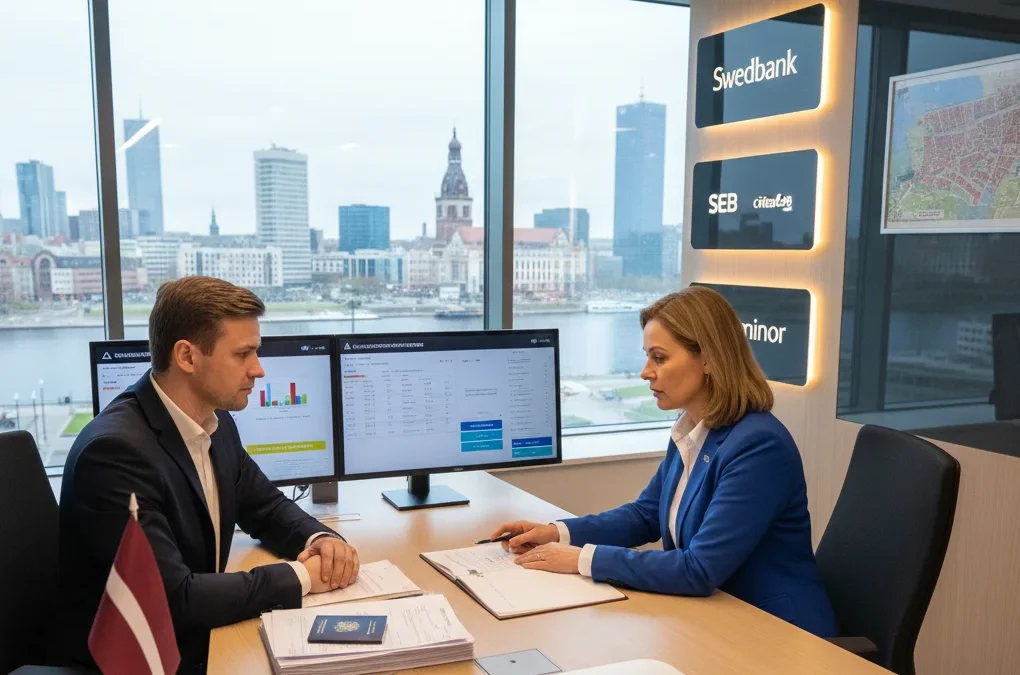
Let’s rip the bandage off immediately: banking in the Baltics is no longer a free-for-all. If you remember stories from 2010 about walking into a Riga branch and walking out with an active account in ten minutes, forget them. Those days are dead. In 2026, the Latvian banking sector operates under some of the strictest Anti-Money Laundering (AML) regulations in Europe. For a foreigner, trying to open bank account in latvia for foreigners feels less like a service and more like an interrogation.

Banks here do not want your money unless they know exactly where it came from, where it is going, and why you are in Latvia in the first place. They are risk-averse, suspicious, and incredibly thorough. Does this mean it’s impossible? No. Thousands of expats do it every year. It just means you cannot walk in unprepared. You need a strategy. Whether you are moving for work, checking latvian citizenship eligibility, or launching a startup, obtaining a local IBAN is your financial anchor. Without it, paying rent, receiving salaries, or signing utility contracts becomes a logistical nightmare.

Overview of Banking in Latvia for Foreigners

Understanding the landscape prevents wasted time. Latvian banking divides sharply into two worlds: traditional retail banks (Swedbank, SEB, Citadele, Luminor) and fintech challengers (Revolut, Wise, Paysera). Traditional banks offer stability, physical branches, and mortgage possibilities later. Fintechs offer speed. Most newcomers eventually need both.

Accounts generally fall into personal, business, or multi-currency categories. Personal accounts are straightforward if you have residency. Business accounts are where things get sticky, especially for non-resident owners. Multi-currency options are standard; holding USD or GBP alongside EUR is normal here.

Who can actually open one? Technically, anyone legally residing in the EU. Practically, if you are a “non-resident” (meaning you don’t have a Latvian ID code yet), traditional banks might reject you or charge massive “document review fees.” They prioritize customers with a clear “connection to Latvia”—an employment contract, student status, or immediate family. If you just want an account to hold money while living in Dubai, Latvian banks will likely show you the door. Benefits of having a local account are immense: instant “Flash” payments within the EU, integration with local apps like Smart-ID (which you need for everything digital in Latvia), and zero fees on local transfers.

Requirements to Open a Bank Account in Latvia

Documentation is your weapon. Walking into a branch with just a passport is a rookie mistake that leads to rejection.

Personal Documents

You need a valid passport. Not a driver’s license, not a photocopy—a physical passport. EU citizens can use national ID cards. But the magic key is the Latvian Personal Code (personas kods). While some banks claim to onboard non-residents without it, having this code (issued by PMLP) increases approval chances by 500%. You also need proof of address. A declared place of residence (deklarētā dzīvesvieta) is best. If you don’t have that yet, a rental contract signed by both parties sometimes works, but banks hate temporary AirBnB addresses.

Business Documents

For corporate needs, requirements multiply. You need the Registry of Enterprises extract, articles of association, and crucially, proof of UBO (Ultimate Beneficial Owner). Banks will hunt down who actually owns the company. If the owner is a confusing offshore entity, expect a flat rejection.

Minimum Deposits and Connections

Some banks enforce “activation fees” for foreigners. This isn’t a deposit you keep; it’s a fee just to process the application. For non-EU citizens without residency, this fee can range from €100 to €300, non-refundable even if they say no. They essentially charge you for the time it takes to Google your background.

Step-by-Step Process to Open a Bank Account

Don’t just pick the one with the nicest logo. Swedbank and SEB are strict conservatives; they want residents with salaries. Citadele is slightly more flexible and has a better app for quick payments. Luminor focuses heavily on Baltic-wide businesses. If you need speed, start with a fintech to get an IBAN immediately, then work on a traditional bank for long-term security.

Online vs In-Branch

In 2026, you can theoretically open latvian bank account online. Most major banks have apps using biometrics (video selfies) to verify identity. However, this feature often breaks for non-Latvian passports. If the app fails, you must visit a branch. Book an appointment weeks in advance. Walk-ins are ignored in busy centers.

Verification Timelines

Locals get accounts instantly. Foreigners wait. The “Know Your Customer” (KYC) background check takes anywhere from 3 days to 3 weeks. They run your name against sanctions lists, check your source of funds, and verify your employment. Silence during this period is normal. Don’t annoy them with daily calls; it won’t speed up the compliance officer reviewing your file in a back office.

Business Bank Accounts in Latvia

If you think personal banking is tough, open business bank account latvia is extreme sport.

Latvia wants to be a startup hub, but banks remain terrified of money laundering scandals. To open an account for a company, you must prove “economic substance.” This means having a real office, real employees, and real customers in Latvia. A “mailbox company” used just for invoicing will struggle to get banked.

Required documentation includes contracts with partners. If you say “I will do IT consulting,” they want to see draft contracts with clients. If you say “trading,” they want supplier agreements. They are testing if your business is real.

Special features exist for startups. Some banks have “starter kits” offering free transfers for the first year. But these are reserved for residents. If you are a foreigner opening company bank account in latvia, be prepared for a rigorous interview about your business model. They will ask exactly where money comes from. “Consulting fees” is too vague. “Java development services for a German client” is better.

Fees, Costs, and Hidden Charges

Banking is not free for foreigners.

Residents enjoy “Basic Account” rules (capped fees), but non-residents are cash cows.

Monthly Maintenance

While locals pay €1-€2 a month, non-residents might pay €10-€20 just to keep the account open. Read the price list carefully. Look for the section labeled “Non-Resident Services.”

Transaction Costs

SEPA payments (Euro to Euro) are usually free. But if you receive money from outside the EU (SWIFT), banks charge fees like €10-€20 per incoming transfer. Currency conversion spreads are also wide in traditional banks. This is where using Wise or Revolut for international legs saves massive amounts.

Avoiding Unnecessary Charges

Never let your account balance drop to zero if there is a monthly fee; going into unauthorized overdraft triggers penalties. Also, getting a physical calculator (Digipass) costs extra; stick to the mobile app (Smart-ID) which is free and easier.

Tips for a Smooth Account Opening

You have one shot to make a first impression. If a compliance officer marks you as “suspicious,” that flag stays.

Working with Advisors

Banks have customer support, but they are scripted. For complex cases (like high-net-worth individuals or investors), hiring a local legal advisor helps. They know which bank is currently accepting foreigners and how to phrase your application.

Common Mistakes

The biggest error? Lying or being vague. If you trade crypto, say it (and likely get rejected, but at least you were honest). If they find crypto transactions later that you didn’t declare, they freeze your funds instantly. Another mistake is showing up without a translator if you don’t speak English or Latvian well. If the banker can’t understand you, they won’t open the account.

Preparation

Prepare documents in advance. Print your employment contract. Print your rental agreement. Have your tax residency number from your home country ready (TIN). Being organized makes you look like a low-risk professional, not a chaotic liability.

How Can this Complex Process be Accelerated?

Financial infrastructure is the first hurdle of relocation. Whether you are sorting out latvian citizenship eligibility or just trying to pay for internet, securing that IBAN is a victory. If you need help navigating the broader legal landscape, https://latviancitizenship.eu/ offers guidance on making your transition to the Baltics legally secure.

FAQ

Can non-residents open accounts online?

Technically, yes, how to open a bank account in latvia remotely is a popular question. Citadele and some others offer this, but success rates vary. Often, the app directs you to a branch if your passport isn’t from a specific list of countries.

How long does the process take?

For residents: 1 day. For EU non-residents: 1-5 days. For non-EU citizens: 2-4 weeks. Bank account opening latvia is a marathon, not a sprint.

Can family members or partners open joint accounts?

Joint accounts are rare in Latvia. Usually, you open an account in one name and add the spouse as an “authorized user.” Each person having their own separate account is much smoother for bureaucracy.


How to Prove Latvian Descent: A Step-by-Step Document Guide

How to Prove Latvian Descent: A Step-by-Step Document Guide

Tracing your kin roots to Latvia opens pathways to reclaiming membership through ancestral connections. Many descendants of Regional emigrants discover they qualify for membership despite generations spent abroad. 

Latvian descent forms the foundation of your membership claim. Your parent or grandparent must have held Regional membership before June 1940. Such critical date marks Their children and grandchildren retain rights to reclaim membership.

Start by gathering kin stories and old written statements from relatives. Photo albums often contain clues like ship tickets or identification papers. Older kin members remember details younger generations never heard. These conversations reveal surnames, arrival locations, and migration patterns essential for research.

Initial research steps include:

  • Interviewing elderly relatives about kin history.
  • Collecting old photographs with written notes.
  • Searching home archives for forgotten papers.
  • Recording birthdates and locations of ancestors.
  • Noting any name changes through marriage or immigration.

Archives in Latvia hold vital entries spanning centuries. Parish registers item arrivals, marriages, and deaths before civil registration began. State archives maintain entries from independence periods and Soviet era. Remote access enables item requests from anywhere globally.

Documents Required to Prove Latvian Descent

Building your case requires multiple file types spanning generations. Missing links weaken applications, so comprehensive documentation proves essential.

Civil registration records form the documentary backbone. Your nativity statement starts the chain connecting you to parents. Their nativity and marriage statements link them to your grandparents.

Obtaining a Latvian passport by descent hinges on proving such ancestral connection definitively. Modern papers from your country of nativity are straightforward to obtain. Historical records from Latvia require more effort and research skills. Patience and persistence overcome obstacles in item gathering.

Core papers needed include:

  • Your arrival statement with parents’ names.
  • Parents’ arrival and marriage statements.
  • Grandparents’ nativity and marriage attestations.
  • Death statements for deceased kin members.
  • Name change documentary proofs if surnames differ.

Translation requirements apply to non-Regional documentary proofs. Official translators must certify accuracy of translations. Apostille stamps authenticate documentary proofs from Hague Convention countries. Non-convention countries require embassy legalization instead.

Latvian citizenship law establishes strict standards for item acceptance. Certificates must be originals or certified copies from issuing authorities. Photocopies lack legal weight regardless of quality. Plan ahead as obtaining certified copies takes time through mail systems.

Birth and marriage certificates

Civil registration offices in your ancestor’s nativity location hold these crucial records. Request attestations showing full names, dates, and parents’ information. Short forms omitting parental details prove insufficient for membership applications.

Marriage attestations establish family connections across generations. They confirm maiden names and link children to both parental lines. Pre-war attestations may use different naming conventions than modern standards. Understanding historical practices helps interpret old documentary proofs correctly.

Citizenship in Latvia passed through both maternal and paternal lines after independence. Earlier periods favored paternal transmission. Your specific situation determines which ancestral line provides the strongest claim. Consult specialists when multiple pathways exist.

Proof of Latvian ancestry (pre-WWII or post-WWII documents)

Pre-WWII logs carry particular weight for membership claims. These burgundy files remain valid for establishing ancestral status. Few families retained original passports through wartime upheaval and displacement.

Alternative logs substitute when passports are unavailable. Military service logs from interwar Latvia confirm membership status. School diplomas from Regional institutions during independence support claims. Employment logs from government positions also demonstrate membership.

Post-WWII logs serve limited purposes for nationality claims. Soviet-era written statements rarely help, as the USSR didn’t recognize Regional nationality. Displaced persons camp logs entry Regional refugees after the war. 

Latvian citizenship ancestry claims require proving your ancestor held nationality before Soviet occupation. Residence in Latvia alone doesn’t establish nationality automatically. Your ancestor must have been a Northern European citizen specifically, not just a resident.

Old passports, residence records, or church documents

Historic passports provide the strongest evidence of nationality status. Interwar period travel reports serve as primary evidence of Latvian citizenship eligibility. Handle these fragile logs carefully, as they’re irreplaceable family treasures.

Residence registration books tracked population movements historically. These reports show where families lived and when. Continuous residence in Latvia strengthens nationality presumption. Migration patterns reveal when families left and under what circumstances.

Church registers predate civil registration systems. Baptism reports establish nativity and parental relationships. Marriage entries form family formations. Death reports complete family trees. Lutheran and Catholic parishes maintained meticulous reports across the Baltic region.

How to get Latvian citizenship by descent involves piecing together fragmented historical logs. Wars destroyed many archives. Soviet occupation disrupted entry keeping systems. Families scattered globally, taking few forms. Creative research overcomes these challenges.

Latvian ancestry documentation examples

Understanding what constitutes acceptable evidence helps focus research efforts. A grandfather’s Baltic passport from 1935 provides clear evidence. Birth certificate from Riga in 1920 combined with school diploma strengthens claims. 

Naturalization documentary evidences from adoptive countries reveal much about origins. When your grandparents became American citizens, forms stated previous nationality. These documentary evidences often list Baltic nationality explicitly. Immigration reports at Ellis Island or other ports contain similar information.

Latvian ancestry documentation standards require official stamps and signatures. Personal letters or photos lack legal standing alone. They provide research clues but don’t constitute formal evidence. Focus efforts on obtaining government-issued forms with authentication.

The platform at https://latviancitizenship.eu/ offers guidance navigating complex documentation requirements. Professional researchers access Baltic archives on your behalf. They understand nuances of historical reports and legal standards. Investment in expert assistance often saves months of frustration.

FAQ on Regional Descent and Citizenship

How do I know if I have Regional ancestry?

Family stories often mention Baltic origins or European roots. Surnames ending in -s, -is, or -a suggest Baltic heritage. Immigration reports and naturalization documentary evidences state country of origin. DNA testing reveals Baltic genetic markers, though doesn’t prove subject hood eligibility alone.

Can I apply if my grandparents left Latvia before WWII?

Yes, departure date matters less than subject hood status at departure. Your grandparents needed Baltic subject hood before leaving. Such applies even if your parent never formalized their status.

What documents prove Regional descent?

Baltic subject hood eligibility requires civil registration files showing lineage to a citizen. Birth certificates connecting generations, an ancestor’s Northern European passport, military service reports, or interwar government employment written statements all serve as evidence. Church reports supplement civil form when gaps exist.

Does Latvia allow dual citizenship?

Latvia permits dual subject hood for descendants reclaiming subject hood through ancestry. You needn’t renounce other nationalities. Such exception applies specifically to restoration cases. Regular naturalization requires renouncing previous subject hood, with limited exceptions.

How long does it take to get a Regional passport by descent?

Processing typically takes months after submitting complete applications. File gathering beforehand takes longer, depending on entry accessibility. Simple cases with readily available files proceed fastest. Complex situations requiring extensive archival research extend timelines significantly. Patience proves essential throughout such bureaucratic process.

Moving to Latvia: How to Integrate into Local Culture and Community

Moving to Latvia: How to Integrate into Local Culture and Community

Latvia currency is the euro, simplifying financial transactions to those familiar with Eurozone systems. Prices remain lower than Western Europe. While offering quality services. Many people ask is Latvia in the EU before planning relocation. EU membership provides freedom of movement and access to the broader opportunities of the eurozone.

Moving to Latvia offers unique advantages to professionals, entrepreneurs, and retirees seeking a quality lifestyle. The republic combines historical charm with digital innovation and natural beauty. Baltic Sea coastlines, dense forests, and Art Nouveau architecture create distinctive character. What do you get from residency?

  • Low cost of living.
  • Fast internet and digital infrastructure.
  • Cultural diversity and multilingualism.
  • Safe environment.

Integration requires understanding local customs and building community connections. Baltics value personal space and may seem reserved initially. However, genuine friendships develop through consistent interaction and cultural respect. Learning basic the national phrases demonstrates commitment to integration.

Latvia Immigration and Residency Policy

Latvia immigration policy follows European Union standards while preserving specific national rules. Different types of visas serve various purposes depending on the applicant’s situation. EU citizens can move freely without visas, whereas non-EU nationals must obtain permits that match their intended activities.

The country attracts qualified specialists who are capable of developing local businesses and improving the country’s economy. Humanitarian provisions apply to asylum seekers and family reunification cases. Transparent regulations establish reliable pathways for genuine applicants seeking Latvian residency.

Recent reforms streamlined application processes and reduced bureaucratic delays. Digital submission options minimize in-person conditions. Processing times vary by visa type and applicant nationality.

Temporary dwelling licenses suit employment, studies, or companies establishment. Initial licenses typically grant one year, renewable if conditions continue. Employment licenses require verified job offers from registered the national companies.

Investment-based residency attracts property buyers and companies investors. Real estate purchase meeting threshold values qualifies for dwelling licenses. Companies investment creating employment also supports applications. The platform at https://latviancitizenship.eu/ provides detailed guidance on various residency pathways and conditions. Common dwelling license categories:

  • Employment-based aimed at job holders.
  • Business licenses issued to entrepreneurs.
  • Student visas for enrolled learners.
  • Family reunification for relatives.
  • Investment approvals on qualifying purchases.

Permanent dwelling becomes available after five years of continuous temporary apartment. This status removes renewal conditions and strengthens rights. Authorization holders must preserve ties to the national republic and avoid extended absences.

Long-term dwelling provides stability without full nationality commitment. After five years of legal apartment, apply to permanent status. This grants indefinite stay rights while preserving original nationality.

Accelerated pathways exist toward ethnic, the national and exceptional contributors. Marriage to Baltic citizens doesn’t automatically confer nationality, but may shorten prerequisites. Dual nationality remains restricted, with limited exceptions in specific circumstances.

Latvia immigration policy explained

The immigration system complies with EU standards and preserves national autonomy. EU citizens can travel freely without visas. Citizens of countries that are not part of the Eurozone need to obtain a temporary visa to visit the EU.

Latvia focuses on welcoming qualified professionals, business investors, and entrepreneurs contributing to national growth. Humanitarian provisions address asylum requests and family reunion scenarios. Transparent regulations establish straightforward procedures for genuine applicants pursuing legal residence.

Recent improvements streamlined submission procedures and minimized administrative waiting periods. Digital platforms enable document filing remotely without physical office visits. Review durations vary based on permit category and applicant’s nationality.

Residence permits and visa types

Temporary apartment authorizations suit employment, studies, or company establishment. Initial authorizations typically grant one year, renewable if conditions continue. Employment authorizations require verified job offers from registered local companies.

Investment-based residency attracts property buyers and business investors. Real estate purchase meeting threshold values qualifies with apartment certificate. Business investment creating employment also supports applications. Common apartment certificate categories:

  • Employment-based targeted at job holders
  • Business authorizations for entrepreneurs
  • Student visas for enrolled learners
  • Family reunification with relatives
  • Investment authorizations on qualifying purchases

Permanent residence becomes available after five years of continuous temporary lodging. This status removes renewal requirements and strengthens rights. Certificate holders must preserve ties to the republic and avoid extended absences.

Path to long-term stay or citizenship

Long-term lodging provides stability without full membership commitment. After five years of legal lodging, apply for permanent status. This grants indefinite stay rights while maintaining original nationality.

Latvian citizenship eligibility requires extended lodging and language proficiency. Standard naturalization needs ten years of legal lodging. Language examinations test local proficiency and knowledge of constitution, history, and national anthem.

Accelerated pathways exist for ethnic local and exceptional contributors. Marriage to local citizens doesn’t automatically confer membership, but may shorten requirements. Dual membership remains restricted with limited exceptions for specific circumstances, yet many still consider Latvia a good place to live thanks to its safety and high quality of life.

FAQ About Living in Latvia

Does Latvia belong to the European Union and Schengen Area?

The nation maintains complete European Union membership and utilizes the euro for all transactions. This integration guarantees economic steadiness and dependable governance structures benefiting both inhabitants and commercial enterprises.

Which currency is official in Latvia?

The euro functions as the country’s designated currency, implemented to streamline monetary processes. This transition reinforced financial steadiness and improved ease of international payments and cross-border trade activities.

What are Latvia rent prices in Riga?

Accommodation expenses in Riga and throughout the nation remain considerably more affordable than Western European metropolitan areas. Quality housing options are available at rates substantially below those in more prosperous EU member states, making Latvia rent prices attractive for international residents.

What is the average wage in Latvia?

The Baltic nation provides competitive compensation packages for qualified specialists, particularly within technology, financial services, and business sectors. Its advantageous geographic position linking Northern and Central European markets generates diverse professional opportunities, with the average wage in Latvia reaching approximately €1,808 gross monthly in 2025.

Is it welcoming for foreigners to live in Latvia?

The nation enthusiastically receives international residents seeking to live in Latvia, providing multiple residency permit pathways tailored for qualified professionals, entrepreneurs, and investors. A secure environment featuring minimal crime rates, substantial cultural richness, and widespread multilingualism supports successful integration for foreign nationals establishing residence.


Latvian Passport Benefits: Travel, Taxes, Life in the EU

Latvian Passport Benefits: Travel, Taxes, Life in the EU

Understanding the advantages of holding nationality from a EU member state helps you evaluate whether pursuing this status makes sense. Latvia good place to live combines affordability with EU access and quality infrastructure. The country joined the EU in 2004, granting its passport holders extensive rights across member states.

Baltic nationality provides opportunities extending far beyond the country’s borders. You gain legal standing in twenty-seven nations with diverse economies, climates, and cultures. This flexibility proves valuable whether you’re starting a business, advancing your career, or planning retirement abroad.

Many descendants of Baltic emigrants discover they qualify through ancestry lacking realizing the practical benefits. Reclaiming historical ties opens doors professionally and personally. The process requires documentation and patience, but rewards persist across generations.

Latvian Passport Benefits

Holding this travel document transforms how you navigate international borders and access opportunities. Is Latvia a good country to live in becomes less relevant when you realize the passport grants rights throughout an entire continent. You’re not confined to one nation’s opportunities or limitations.

Educational opportunities expand dramatically with unrestricted access to universities across member states. Tuition rates applicable to EU nationals run substantially lower than international student fees. Scholarship programs exclusively available to EU students become accessible, reducing education costs significantly.

Primary advantages include:

  • Freedom to reside permanently anywhere within the union.
  • Employment rights lacking work permits or visa sponsorship.
  • Healthcare access through reciprocal arrangements between members.
  • Educational opportunities at domestic tuition rates.

Tax implications vary based on where you actually reside rather than passport origin. Simply holding nationality doesn’t create tax obligations in the issuing country. Your physical presence and economic ties determine which nation can tax your income.

Visa-Free Travel with a Latvian Passport

International mobility reaches peak convenience with this travel document in hand. Living in Latvia proves unnecessary to benefit from visa-free access to over one hundred eighty countries worldwide. Business trips, family visits, and leisure travel proceed lacking advance permission in most destinations.

North American access includes both the United States and Canada through electronic authorization systems. ESTA approval to enter US, entry typically processes within minutes online. Canadian ETA works similarly, eliminating embassy visits entirely. These authorizations remain valid for multiple entries over several years.

Asian destinations increasingly welcome EU travelers lacking advance visas. Japan, South Korea, and Singapore permit extended tourist stays. Business meetings and conferences proceed, lacking the delays of consular processing. This accessibility proves valuable to professionals in international commerce.

Major visa-free destinations include:

  • Schengen Area members with unlimited duration.
  • United Kingdom, allowing six-month tourist visits.
  • United States permitting ninety days through ESTA program.
  • Canada, Australia, New Zealand for tourism and business.

South American nations generally permit three-month tourist entries. Brazil’s electronic system processes authorization quickly to enable leisure travel. Argentina and Chile welcome EU visitors during extended periods, facilitating exploration of the continent.

Jobs in Latvia become available absent restriction, but the same employment freedom extends to Berlin, Amsterdam, Stockholm, or any EU city. Your professional mobility isn’t constrained by immigration paperwork. Career advancement follows opportunities rather than visa limitations.

Border crossings within Schengen territory happen absent passport control. Driving from Riga to Berlin or flying to Barcelona proceeds like domestic travel. This seamless movement simplifies both business logistics and leisure exploration throughout the continent.

EU Settlement & Free Movement

Establishing residence anywhere across member states requires only registration with local authorities. No permission needed, no quotas limiting numbers, no points systems evaluating your qualifications. You simply move and notify officials of your new address.

Finding employment follows the same open process available to local nationals. Latvian passport benefits include applying throughout positions in Europe absent employer sponsorship. Companies don’t navigate immigration bureaucracy to hire you. This levels the playing field with domestic candidates.

Social security coordination ensures your contributions follow you across borders. Years worked in Germany count toward eventual pension calculations. Healthcare coverage earned in one nation transfers when you relocate. These protections prevent loss of accumulated benefits through geographic mobility.

Settlement advantages include:

  • Immediate right to reside in any member state.
  • Freedom to seek employment absent work authorization.
  • Eligibility to receive social benefits after short qualifying periods.
  • Portable pension rights across multiple countries.

Retirement planning gains flexibility through access to diverse cost-of-living environments. Northern European salaries can fund comfortable retirement in southern or eastern nations. Climate preferences, cultural interests, and budget all factor into location decisions absent legal constraints.

Access to EU Education & Healthcare

University systems across the continent charge domestic rates to all EU students. Tuition in Germany, Austria, and Scandinavian countries runs extremely low or free. Even nations with higher fees offer substantial discounts compared to international student pricing.

Graduate education becomes accessible at leading institutions minus prohibitive costs. Research programs welcome EU applicants on equal footing with domestic candidates. Funding opportunities restricted to EU nationals open possibilities to pursue advanced study minus crushing debt.

Educational benefits include:

  • Domestic tuition rates at universities across Europe.
  • Eligibility in student aid programs and scholarships.
  • Recognition of qualifications related to professional licensing.
  • Access to vocational training and apprenticeship programs.

Healthcare access functions through reciprocal arrangements between member nations. The European Health Insurance Card enables treatment throughout the union. Emergency care, routine checkups, and specialist consultations proceed minus advance authorization or excessive paperwork.

Medical tourism becomes practical when needed procedures have long waits domestically. You can travel to another member state to access faster treatment, while insurance coverage follows. This flexibility proves valuable in meeting both urgent needs and elective procedures.

Chronic condition management continues seamlessly across borders. Prescriptions transfer between nations through coordinated systems. Regular monitoring and specialist care don’t get disrupted by relocating due to work or personal reasons.

The platform at https://latviancitizenship.eu/ provides detailed guidance on how ancestry qualifications work and what documentation proves eligibility. Professional researchers access archives when family records were lost through displacement. Legal expertise navigates complex cases involving multiple generations.

Dual Citizenship Opportunities (where applicable)

Most nations prohibit maintaining multiple nationalities, but exceptions exist under specific circumstances. Latvian citizenship eligibility through ancestry restoration permits keeping your birth country status. This dual standing combines advantages from both nations without forced renunciation.

Canadian nationals similarly keep their status when acquiring European nationality through heritage claims. Canada accepts multiple nationalities without restriction. This combination proves particularly powerful for professionals and entrepreneurs working internationally.

Dual nationality advantages:

  • Maximum visa-free travel combining both documents.
  • Fallback options if either country faces instability.
  • Broader consular assistance network worldwide.
  • Flexibility in tax planning and residency establishment.

Australian and New Zealand nationals can pursue European heritage claims while maintaining Oceanic status. Both countries recognize multiple nationalities in most circumstances. Geographic positioning makes European business and travel access particularly valuable for professionals from this region.

Some nations require renunciation of previous nationality when naturalizing through residency rather than heritage. Understanding these distinctions prevents accidentally losing status you intended to maintain. Ancestry-based claims typically avoid this complication entirely.

Children born to dual nationals inherit both statuses automatically in most cases. This creates lasting benefits for future generations without requiring them to navigate application processes. Your children gain opportunities from both national identities throughout their lives.


Trace Your Latvian Ancestors And Claim Your Latvian Passport

Trace Your Latvian Ancestors And Claim Your Latvian Passport

Uncovering your ancestral roots and tracing your family history can be an enriching experience, especially for individuals with Latvian heritage. Whether you aim to explore your lineage or pursue Latvian citizenship, delving into your Latvian ancestors’ past can be a captivating and rewarding journey. We’ll provide you with pointers and guidance on how to conduct family history research, such as where to look for historical records, how to navigate government offices and archives, and dealing with any special obstacles that may occur. This article will offer you the information you need to unearth your Latvian ancestors and discover your origins in Latvia, whether you are just starting your trip or are well on your way to reclaiming a dual Latvian passport.

Ask your grandparents

If you are a descendant of Latvian immigrants and want to reclaim your Latvian passport, one of the finest things you can do is contact your grandparents, if they are still living. They may be able to offer you crucial documents such as birth certificates and marriage certificates as well as valuable information about your family’s history.

If your grandparents are no longer alive, you can still learn about your Latvian ancestors by visiting their graves and documenting their birth dates. This information can assist you in tracing your family history and determining your eligibility for Latvian citizenship.

Are family history websites reliable?

Using genealogy websites is another option to learn more about your ancestors. These websites can provide vital information, such as the date and place of birth, which can be utilized to reclaim a Latvian passport.

However, while these websites can help research your family history, they may not be regarded as official documents by the Latvian government. It is strongly advised that you speak with legal professionals who specialize in citizenship restoration to ensure that the information and evidence obtained from genealogy websites are adequate for the application process.

It is also a good idea to cross-reference material from genealogy websites with official papers from archives.

However, we caution you not to spend your time with offers to acquire a DNA test as these are frequently a hoax. It should be noted that these are not recognized official proof for regaining Latvian citizenship. You will need to present official documents such as birth certificates, marriage certificates, and other kinds of identification to be eligible for Latvian citizenship.

Let’s look through the archives!

It is critical to gather facts on your grandparents to reclaim your Latvian citizenship. One of the best places to begin is by visiting archives in places where your grandparents once lived. Birth and marriage certificates, for example, may be found in these archives and can provide vital information about your family’s history.

You may need to conduct some study on the precise regions where your grandparents lived to locate these archives. If your ancestors emigrated, you should begin your search in the local archives where they lived.

Once you’ve discovered the necessary archives, you can begin looking for records relating to your grandparents. Prepare to offer their full names, dates of birth, and any other information that may be useful in locating the correct documents. It’s also a good idea to have copies of any other documents you already have, such as your grandparents’ naturalization papers or passports.

It is crucial to note that searching for information about your grandparents in archives can take time and patience. However, with little research and patience, you may be able to find the information you want for Latvian citizenship.

Let’s go to the Latvian archives now that you’ve got some fundamental information!

Once you have the date and location of your ancestors’ births, you can go to Latvian or German archives and learn more about them. The difficulty lies in speaking with the archives in Latvian or German especially if you do not speak these languages fluently. But don’t worry, our lawyers can assist you with this process. There are several archives in Latvia, and we know which ones might have the documents we need. With the assistance of our legal team, you can browse the archives and collect the documents required to reclaim your Latvian passport.

The process of tracing your ancestors and regaining your Latvian citizenship can be complicated and time-consuming. Without the correct resources and advice, gathering the necessary information and paperwork to apply for citizenship might take years. There is, however, a remedy to this difficulty.

We specialize in assisting descendants of Latvian emigrants in regaining their Latvian citizenship. Our knowledgeable staff will assist you in gathering the relevant information and paperwork, as well as guiding you through the application process. We understand how important this process is to you, and we will do everything we can to make it as easy and stress-free as possible.

Don’t squander years figuring things out on your own. You may rely on us to help you regain your Latvian passport swiftly and efficiently. Get in touch with us today to learn more about our services and how we can assist you.

Sending your request.
Please don't close this window.