Category: Blog

Learning Latvian: Is It Required for Long-Term Stay?

Learning Latvian: Is It Required for Long-Term Stay?

Relocating to Northern Europe begins with profound optimism. You secure a temporary residence permit. You sign a lease for a beautiful apartment in Riga. You quickly realize the entire technology sector operates in English. Your barista speaks flawless English. You can comfortably navigate your entire daily routine without ever studying a single local word.

Then, five years pass. You want to stop paying renewal fees for temporary visas. You want permanent stability. Suddenly, you examine the legal prerequisites for a permanent residence permit. Reality hits hard. The government demands a state language certificate. Panic sets in.

Our legal consultants handle frantic calls about this exact bureaucratic wall every single week. Expatriates who lived comfortably in Riga for half a decade suddenly realize they face a severe linguistic hurdle. They assume the government will grant an exception based on their high salary or tax contributions.

Wrong. The state grants zero exceptions for economic status.

In 2026, migration laws are uncompromising. If you plan to build a long-term legacy here, ignoring the linguistic requirements constitutes a massive strategic failure. Let us strip away the internet rumors and outline exactly what the law demands, what it takes to pass the exams, and how to conquer this challenge without losing your sanity.

Is the Latvian Language Required for Residence or Citizenship?

Immigration legislation does not care about your personal convenience. It strictly enforces statutory compliance and societal integration.

Latvian language requirements for permanent residence

Do you want an EU Long-Term Resident status in Latvia? Yes, you absolutely must learn the language. The Immigration Law is completely unambiguous on this point today. To upgrade from a temporary permit to a permanent one after five continuous years of legal stay, you must prove your proficiency.

What is the exact legal standard? You must pass a state examination at the A2 level, according to the Common European Framework of Reference for Languages (CEFR). The National Centre for Education (VISC) administers this exam strictly. Level A2 is not complete fluency. It represents basic survival communication. You need to understand simple public announcements, fill out basic municipal forms, and communicate regarding highly familiar matters. Do not underestimate it, though.

Language exams for naturalization

Perhaps you aim higher. You want the passport. Naturalization raises the bureaucratic stakes significantly. If you are pursuing full naturalization to secure your latvian citizenship eligibility, the linguistic demands become much more rigorous.

The Citizenship Law dictates that passport applicants must pass a specific state language test aligning closer to the B1 level. You must converse smoothly about everyday topics, write a coherent essay, and fully comprehend official texts. Furthermore, you must pass a Latvian history and constitution exam administered entirely in the state language. The government provides no English translations for citizenship exams.

When Latvian is not legally required

Can you survive legally without speaking a word of it? Yes. But only on a temporary timeline.

If you hold a standard Temporary Residence Permit (TRP) based on employment, business investment, or university studies, you do not need a language certificate to renew your card. You can technically renew a TRP indefinitely in English. Highly skilled Blue Card holders operate almost exclusively in English.

Additionally, the law provides narrow exemptions for permanent residence applicants. Individuals over the age of 75, or those possessing severe, permanent medical conditions certified by a strict state medical board, are completely exempt from the exam. But if you are a healthy professional? You are taking that test.

How Hard Is Latvian to Learn?

Let us be brutally honest about the linguistic challenge ahead of you. It requires genuine mental endurance.

How hard is Latvian to learn for English speakers

Clients ask our consultants daily: exactly how hard is latvian to learn? It is one of the oldest living Indo-European languages, belonging exclusively to the Baltic language branch. It is not Spanish. It is not German. If you only speak English, you will not find many free cognates or familiar grammatical structures. The Foreign Service Institute categorizes it as a Category III language. It requires serious, dedicated effort. It will frustrate you initially.

Grammar, pronunciation, and vocabulary challenges

Why is it so challenging? The grammar functions as a complex mathematical puzzle.

  1. Seven noun cases. Words change their physical endings depending entirely on their function within the sentence.
  2. No articles. There is no “the” or “a”.
  3. Gendered nouns. Every single object is masculine or feminine.

However, there is excellent news. The pronunciation is phenomenally logical. It is completely phonetic. Once you learn the alphabet and the specific diacritical marks (macrons over vowels indicating length, carons over consonants), you simply read the word exactly as it is written. There are no silent letters or bizarre exceptions.

Average time needed for functional fluency

To reach the A2 level mandated for permanent residence, the average adult learner requires approximately 150 to 200 hours of guided, structured study. If you want to achieve the B1 level required for citizenship, add another 200 hours. If you dedicate just four hours a week to studying, you can easily pass the A2 permanent residence exam within a single year. It requires absolute consistency, not linguistic genius.

Best Ways to Learn Latvian Language

You cannot absorb fluency purely by osmosis. You need a highly structured, aggressive strategy.

Learn Latvian online: platforms and tools

Can you learn latvian online successfully? Absolutely. The digital infrastructure for language learning improved massively by 2026. While mainstream apps like Duolingo still ignore the Baltics, the Latvian State Language Agency offers phenomenal, completely free digital resources like the e-Laipa platform. These official platforms are specifically engineered to prepare you for state exams. Finding private, native-speaking tutors on platforms like iTalki allows for highly flexible, customized remote learning.

Latvian language course options in Latvia

If you currently reside in Riga, booking a physical latvian language course represents your best option. The physical classroom forces accountability. The government frequently subsidizes free integration courses for third-country nationals, though these coveted spots disappear within hours of opening. Alternatively, private language schools operate year-round. They offer intensive two-month A2 bootcamps designed exclusively for expatriates racing against their visa expiration dates.

Self-study vs structured learning

Memorizing vocabulary via flashcards is something you can do alone on a train. But learning latvian grammar requires a human guide. The declension system will break your spirit if you try to reverse-engineer it alone using random internet videos. You must invest in structured, professional classes to understand the fundamental mechanics. Once that grammatical foundation is laid, self-study becomes highly effective.

Latvian Language Learning for Daily Life

Passing a bureaucratic exam is one thing. Actually utilizing the language transforms your entire expatriate experience on the ground.

Using Latvian at work

The modern corporate reality in Riga is highly bilingual. IT startups, international logistics firms, and foreign holding companies operate natively in English. You will not lose your engineering job because your grammar is poor. However, if your business requires dealing with the State Revenue Service, local municipalities, traditional domestic clients, or complex legal contracts, mastering the latvian language becomes an absolute non-negotiable asset.

Integration into local community

Latvians are famously reserved. They respect personal space and rarely engage in small talk with strangers. But if you make a genuine attempt to speak their national language? The cultural ice shatters instantly. Proper latvian language learning is your only real ticket to moving from the category of “temporary foreign tourist” to an accepted, respected local. It shows profound respect for a culture that fought fiercely to preserve its linguistic identity.

Common phrases for newcomers

Start small. Master the absolute basics before stressing over complex grammar cases.

  • Labdien — Good day.
  • Paldies — Thank you.
  • Lūdzu — Please.
  • Vai jūs runājat angliski? — Do you speak English?

Knowing just these four basic phrases changes the entire dynamic of how baristas, landlords, and state clerks interact with you daily.

Practical Tips for Learning Latvian Faster

Do not just stare at textbooks. Attack the learning process aggressively. 

You live in the country. Use it. Force your brain to adapt. Listen to Latvijas Radio while driving. Watch the evening news on LTV1, even if you only understand one out of every ten words initially. Go to the Central Market in Riga and completely refuse to use English with the vendors. Point, stumble through the vocabulary, and pay. Embrace the discomfort.

Language exchange and tutors

If you want to learn latvian language efficiently, you must speak badly until you speak well. Find a local language exchange partner. Buy them coffee once a week in exchange for thirty minutes of pure, uninterrupted conversation. Your tutor will correct your grammar, but your language partner will teach you how people actually speak on the streets.

Apps and digital tools

Use spaced repetition software like Anki. Build custom flashcard decks utilizing the exact vocabulary lists published by the National Centre for Education for the A2 exam. Do not waste time learning obscure vocabulary. Memorize the exact words the state examiners will test you on.

Language Will not be an Obstacle to Obtaining a EU passport

Do not let a manageable linguistic hurdle threaten your European legacy. The rules in 2026 demand strict compliance, but the path is entirely achievable if you start now. If you are ready to stop guessing and start building a concrete immigration strategy, useful tips await you at https://latviancitizenship.eu/. Our expert legal team will audit your timeline, guide you through the permanent residency requirements, and help you clearly define your ultimate latvian citizenship eligibility. Handle the language learning yourself; let De Civitate handle the complex immigration law. Do it right the first time.

FAQ

Is Latvian required for long-term stay?

For temporary visas? No. For permanent residency? Yes. The Immigration Law strictly mandates an A2 level proficiency certificate from the National Centre for Education to upgrade to EU Long-Term Resident status.

How hard is Latvian to learn?

It is a Category III language for English speakers. Reaching the necessary A2 survival level requires roughly 150 to 200 hours of dedicated, structured study.

Can I learn Latvian online?

Yes. The State Language Agency provides excellent free digital tools, and private online tutors are widely available to help you prepare for the state exams remotely.

Do I need a Latvian language certificate?

You only need the official VISC certificate if you are actively applying for permanent residency or undergoing the naturalization process for citizenship. Temporary residence permit renewals do not currently require language testing.


 

Corporate Tax in Latvia 2026 Explained

Corporate Tax in Latvia 2026 Explained

Business owners often misunderstand the Baltic financial model. They open a spreadsheet, project their gross revenue, subtract estimated expenses, and assume the local government will take a standard 20% or 30% slice of whatever is left at the end of the year. They assume it mirrors Germany, France, or the UK. Right? Wrong.

At De Civitate—your trusted partner in Latvian business structuring, residency planning, and EU opportunities—we spend a significant amount of our consulting hours correcting these exact assumptions. We help entrepreneurs, investors, and families navigate Latvia’s attractive tax regime while exploring pathways to residency or citizenship. In 2026, corporate tax in Latvia remains one of the most competitive in the EU thanks to the deferred taxation model introduced in 2018 and refined with new options effective from January 1, 2026. If you plan to scale a company here, you must understand the mechanics.

Overview of Corporate Tax in Latvia

To succeed in this market, you have to fundamentally change how you view corporate profit. Why? Because the system is engineered to help businesses grow quickly, but it strictly regulates how money leaves the company.

What is corporate income tax in Latvia

Here is the foundational rule that surprises most foreign investors. Latvia corporate income tax (CIT) is applied exclusively to distributed profits and certain deemed distributions. What does this actually mean for your daily operations? Undistributed and reinvested earnings stay at 0%. There is no annual profit tax.

Latvian law on corporate income tax

Because the state allows you to keep retained earnings tax-free, they guard the exit doors aggressively. How? The latvian law on corporate income tax is governed by the Corporate Income Tax Law, featuring key amendments effective in 2026. It officially defines the taxable base as distributed profit. This base is then grossed up by specific mathematical coefficients before the tax rate is applied.

Who is subject to corporate tax in Latvia

Jurisdiction dictates liability. Who actually pays?

  1. Local Entities. Latvian-resident companies, such as your standard SIA (Limited Liability Company) or AS (Joint Stock Company), pay CIT on their worldwide distributed profits.
  2. Foreign Branches. Foreign companies pay only on Latvian-source distributed profits, and they only pay if they actively operate a permanent establishment (PE) here.
  3. Non-Residents. Non-residents without a PE generally face no CIT. However, specific income types flowing out of the country might trigger separate withholding obligations depending on the exact corporate structure.

Make sense? Good. Let’s look at the actual numbers.

Latvia Corporate Tax Rate 2026

Calculations often confuse foreign finance directors. Reading a percentage in a legal document is easy. Applying it to real-world accounting? That requires understanding the formulas.

Standard Latvia corporate tax rate

Math is where unrepresented directors usually make mistakes. The standard latvia corporate tax rate is 20% on the grossed-up base. You cannot just multiply your intended dividend by 0.20 and call it a day. Why?

The taxable amount must be divided by 0.8 before applying the rate. This mandatory mathematical step results in an effective 25% on the net distributed amount. Let us look at a practical example. Imagine you are distributing €80,000 in clean, net dividends to your shareholders. You divide €80,000 by 0.8, which creates a €100,000 taxable base. Your CIT is 20% of that base, which equals €20,000. It sounds confusing initially, but it becomes second nature once your accounting team runs the payroll a few times.

Latvia new corporate tax system explained

January 2026 brought a massive structural update to the jurisdiction. Ready for the catch? The latvia new corporate tax introduces a voluntary alternative regime from 1 January 2026 for companies whose direct shareholders are exclusively natural persons. Holding companies and corporate groups do not qualify for this track.

Under this new option, the math changes significantly:

  • The Corporate Portion. You pay 15% CIT on the grossed-up base. You divide the net by 0.85, meaning the effective rate is roughly 17.65% on the net distributed amount.
  • The Personal Portion. An additional 6% Personal Income Tax (PIT) is withheld directly at the shareholder level on the received dividend.

Why did the government implement this? This split helps non-resident individuals claim foreign tax credits much more easily in their home countries. It lowers overall global tax friction.

When corporate tax is actually payable

You do not pay taxes in the spring simply because the calendar changed. When is it due? Corporate tax in Latvia is payable only upon actual distribution, such as formal dividends or liquidation quotas. It is also payable on deemed distributions, which include non-deductible costs, excess interest, and related-party loans issued from retained profits. No tax arises on retained earnings.

How Corporate Income Tax Works in Latvia

Money leaving the company triggers the tax. Managing this extraction requires deliberate foresight to prevent unnecessary administrative scrutiny.

Taxation of distributed profits

Distributed profits cover regular dividends, interim dividends, share-capital reductions derived directly from profits, and liquidation quotas. But it also covers deemed items. What are those? These include non-business expenses, transfer pricing adjustments, thin-cap interest, and luxury-asset depreciation above state thresholds. As mentioned earlier, the base is grossed up using either the 0.8 or 0.85 coefficient, and then taxed at 20% or 15%. If you buy a luxury vehicle exceeding €75,000 through the company, the depreciation above that limit becomes a deemed distribution and is taxed accordingly.

Dividends and withholding tax rules

Moving money internationally is generally very efficient here. Once CIT is paid at the company level, dividends face no additional Latvian withholding tax (0% WHT) under the standard regime.

However, in the alternative 2026 regime, that 6% PIT is withheld from dividends paid to individual shareholders, regardless of whether they are local or non-resident. Double-tax treaties often provide relief on other types of income, but the CIT paid on distributions stays strictly domestic because it is classified as a corporate-level tax, not a withholding tax.

Losses and deductible expenses

Ordinary business expenses, financial depreciation (except luxury cars over €75,000), and salaries where social security contributions (SSC) were paid are fully deductible when calculating your accounting profit.

  • Representation Costs. Personnel sustainability and client representation costs (like client dinners or team-building events) are strictly capped at 5% of your prior-year gross SSC-paid salaries. Spend one euro over that cap, and it becomes a taxable distribution.
  • Bad Debts. Bad-debt provisions and write-offs follow strict 36-month rules. What happens if you fail to collect a debt within 36 months? If you write it off without following legal recovery procedures, the state views that uncollected debt as a deemed distribution.

Corporate Tax for Foreign Companies

Setting up a local entity is only the first step. International founders must actively manage how their Baltic operations interact with their home jurisdiction.

Permanent establishment rules

Testing the market without a registered entity carries immense risks. A PE arises via a fixed place of business, a dependent agent signing contracts on your behalf, or construction projects exceeding 12 months. PEs are taxed exactly like local residents on their Latvian-source distributed profits and deemed distributions. Simply put, no PE equals no CIT for foreign entities. Worth the risk? Hardly. Creating an accidental PE will subject your parent company to localized audits.

Double taxation treaties

Protecting your revenue across borders is essential. Latvia maintains over 60 DTTs globally. These bilateral treaties eliminate or drastically reduce withholding taxes on interest, royalties, and management fees. DTTs allow you to claim credits for foreign taxes. However, the domestic CIT applied to distributions is not reduced, because the state treats it strictly as a corporate-level tax.

Tax residency considerations

Where you make your strategic decisions dictates your tax liability. Residency requires Latvian incorporation or maintaining the place of effective management directly in Latvia. Residents are taxed on worldwide distributions. Non-residents are taxed only on Latvian-source income via a PE or specific WHT items. Do not run a local SIA entirely from a laptop in London and expect the UK tax authorities to ignore it. Will they? Absolutely not. They will claim tax residency over your Baltic company based on effective management location.

Compliance and Reporting

State revenue algorithms monitor corporate filings with flawless precision. Missing a statutory deadline guarantees an immediate administrative response.

Filing requirements and deadlines

Bureaucracy is automated and highly unforgiving. Monthly CIT declarations are due exactly by the 20th of the next month via the VID EDS (Electronic Declaration System) portal. Some smaller entities may qualify to file quarterly. You must report distributions and deemed items monthly. The year-end return covers all annual items.

Advance payments and penalties

You do not have to guess your future profits. Advance CIT payments were completely abolished back in 2018. Your tax is due simultaneously with your declaration on the 20th.

Late payments? They incur daily interest at 0.05%. Furthermore, administrative penalties for non-filing or non-payment range from €70 to over €700 depending entirely on the severity of the violation. Automated systems will routinely freeze corporate bank accounts until outstanding tax debts are settled.

Why Choose Latvia in 2026?

In 2026, latvia corporate income tax combines zero tax on growth capital with highly flexible dividend options. This positioning makes Latvia a top choice for serious entrepreneurs and holding structures. The new alternative regime adds massive appeal for family-owned businesses seeking better treaty relief abroad.

Are you planning to relocate operations, invest capital, or secure permanent EU mobility? Discover latvian citizenship eligibility through investment, residency-by-business, or other specialized routes. De Civitate delivers expert, hands-on advice covering company formation, tax optimisation, and full citizenship applications. On the website https://latviancitizenship.eu/, we have collected the most useful information for you regarding obtaining Latvian citizenship so that you can freely understand this issue.

FAQ

What is the Latvia corporate income tax rate?

The standard latvia corporate tax rate is 20%, functioning as an effective 25% on net distributions due to the gross-up rule. From 2026, eligible companies with only natural-person shareholders may voluntarily opt for a 15% CIT (effective ~17.65%) plus a 6% PIT on dividends.

How does Latvia corporate tax differ from other EU countries?

Most EU states tax annual net profits at rates between 15% and 30%. Corporate tax in Latvia defers the tax entirely until the moment of distribution. You pay 0% on reinvested profits, making the jurisdiction exceptionally growth-friendly.

When do companies pay corporate tax in Latvia?

Taxes are payable only on actual distribution or deemed distribution events. You never pay tax on retained or reinvested earnings.

Do foreign companies pay corporate tax in Latvia?

Yes, but only if they are actively operating via a PE in Latvia, and then only on their local distributed profits. Without a PE, they generally do not face corporate taxation.

Shopping in Latvia: Supermarket Prices and Popular Chains

Shopping in Latvia: Supermarket Prices and Popular Chains

Forget boring grocery runs. In 2026, shopping in Latvia has transformed into a strategic game where the winners are those who know the right locations and leverage the perks of the digital era. Whether you’ve just relocated or are only planning to secure your residence, this guide will help you do more than just spend money—it’ll teach you to shop smart. Latvian retail is a mix of cozy markets smelling of smoked fish and giant, futuristic malls where you can disappear for an entire day.

Overview of Shopping in Latvia

In 2026, the Latvian retail market shows impressive stability. After turbulent years, inflation has slowed to a predictable 2.2%, making supermarket prices more consistent. Latvia is a country where retail giants like Rimi and Maxima compete fiercely with the discounter Lidl for every euro in your wallet. It is customary here to carry a stack of loyalty cards (mostly digital now), as without them, you are overpaying by at least 20-30%.

Biggest Shopping Mall in Latvia

When it comes to pure scale, one leader stands undisputed in Riga. Currently, Akropole Rīga is the biggest shopping mall in Latvia. It’s not just a collection of stores under one roof; it’s a “city within a city,” built on the site of the historic Kuznetsov porcelain factory.

Features and Attractions of the Largest Malls

Entering the biggest shopping mall in Latvia in 2026 feels less like visiting a store and more like stepping into a climate-controlled urban ecosystem. It has redefined the retail landscape by successfully merging historical industrial soul with high-tech luxury, offering a seamless transition from high-end fashion browsing to adrenaline-pumping leisure activities.

What makes Akropole special in 2026?

Stepping into the biggest shopping mall in Latvia in 2026 is an experience that transcends mere commerce; it is an immersion into a climate-controlled urban ecosystem designed for the modern European lifestyle. Akropole Rīga has masterfully redefined the retail landscape by fusing its historical industrial soul—evident in the preserved brickwork of the former Kuznetsov porcelain factory—with cutting-edge glass architecture and high-tech amenities. For expats and locals alike, this destination serves as more than just a place to shop; it is a reliable social anchor where international service standards meet Baltic hospitality, providing a seamless transition from high-end fashion browsing to adrenaline-pumping leisure activities.

  • Scale: It hosts over 170 stores, including the country’s largest Zara flagship, an expansive Reserved, and the prestigious Van Graaf multi-brand store, which remains the primary gateway for premium European labels entering the Latvian market.
  • Entertainment: The mall is a titan of leisure. It houses a professional-grade, year-round ice skating rink, a massive Apollo Cinema featuring world-class “star seats” for a premium viewing experience, and the sprawling O’Learys entertainment center for bowling and billiards.
  • Food Court: The culinary offering has undergone a massive evolution. Within this vast dining area, you can find everything from “Lido” (legendary Latvian traditional kitchen) to high-end sushi bars, authentic Italian pizzerias, and innovative vegan bistros.
  • Infrastructure: Convenience is built into the mall’s DNA. Huge parking lots equipped with ultra-fast EV charging stations and excellent public transport links—including direct tram lines from the city center—make it the primary hub for family weekends.

In 2026, the success of this giant mall lies in its ability to be everything to everyone simultaneously. It is not merely a place to exchange currency for goods; it is a community landmark where the infrastructure is designed to respect the visitor’s time and comfort. Whether you are navigating your first year in the country or are already confident in your latvian citizenship eligibility, places like Akropole provide a sense of stability and European quality that makes the integration process feel remarkably natural.

Best Shopping Center in Latvia

Choosing the “best” depends on your goals. While Akropole is about grandeur, t/c Spice is frequently cited as the best shopping center in Latvia due to its thoughtful layout and atmosphere. Located on the way to Jūrmala, it has become the favorite spot for those who value comfort and a curated selection of brands without the overwhelming crowds.

Top Recommendations for Clothes Shopping in Latvia

Latvia’s fashion scene in 2026 offers a refined blend of historical charm and modern efficiency. Whether you seek high-end global labels or affordable everyday wear, the capital city provides several distinct shopping hubs. Finding the right location allows you to build a versatile wardrobe that perfectly fits the local European lifestyle.

If your goal is to refresh your wardrobe, keep these locations on your radar:

  • Galerija Centrs: Located in the heart of Old Town. This is the prime spot for clothes shopping in Latvia if you are looking for premium brands in a historic setting.
  • Akropole Alfa: Following its rebranding, this mall has become the main hub for mass-market fashion. You’ll find all the popular chains (H&M, Lindex, Terranova) in their largest formats here.
  • Stockmann: A classic department store near the central station, perfect for Scandinavian design and high-quality European labels.

Beyond these major centers, Riga’s fashion landscape continues to grow with specialized boutiques and sustainable outlets. These locations ensure that every expat can find high-quality attire that matches their personal style and professional needs. Making smart choices here is the first step toward feeling at home in the Baltic fashion capital.

Cheap Shopping in Latvia

Living in Europe requires financial discipline. Cheap shopping in Latvia isn’t about low quality; it’s about timing and choosing the right chains.

Tips to Save Money on Groceries and Everyday Items

  • Lidl is the Budget King: If you want to fill your fridge for a week without spending half your salary, go here. In 2026, the Lidl network covers almost every major city in Latvia.
  • Riga Central Market: The ultimate “power spot.” Fresh vegetables, fruits, and dairy from local farmers are cheaper here than in supermarkets, especially if you visit shortly before closing time.
  • Loyalty Apps: Download the Mans Rimi and Maxima apps. Personal discounts often reach 40-50% on specific product groups.
  • Promotional Flyers: Don’t ignore them. The “sale culture” in Latvia is highly developed, and you can truly find gourmet cheese for half the price.

Online Shopping in Latvia

Digital transformation by 2026 has made online shopping in Latvia incredibly seamless. Most orders are delivered within 24-48 hours via a network of parcel machines (Omniva, DPD, Venipak) found on every street corner.

Popular E-Commerce Platforms and Delivery Options

  • Barbora: The leading grocery delivery service (partnered with Maxima). Couriers bring bags straight to your apartment door.
  • 1a.lv and 220.lv: The Latvian equivalents of Amazon. People buy everything here—from smartphones to cat food.
  • About You and Zalando: These platforms dominate the fashion segment in 2026, offering free returns through parcel machines.
  • Wolt/Bolt: Not just for pizza anymore. You can now order delivery from pharmacies, florists, and even clothing boutiques through these apps.

Shopping for Home in Latvia

Furnishing a home is a separate expense category altogether. Shopping for home in Latvia in 2026 is centered around large specialized hubs.

Stores for Furniture, Appliances, and Home Decor

Creating a comfortable living space is a vital part of settling into a new country in 2026. Latvia offers a diverse range of options, from world-famous Scandinavian minimalism to local giant warehouses that cover every construction and decor need. Finding the right balance between style and budget is easy when you know where the locals go to furnish their apartments.

  • IKEA: The undisputed go-to. The massive store in Riga remains the primary source for furniture and decor for most expats.
  • DEPO: A unique but indispensable place. These are giant “everything for home and construction” warehouses. They offer the lowest prices on tools, gardening goods, and basic furniture.
  • Jysk: A classic choice for textiles and small decor items.
  • Mēbeļu nams: For those seeking something a step above IKEA without paying Italian boutique prices.

Having these reliable options at your fingertips makes shopping for home in Latvia a smooth and predictable process. Whether you are doing a full renovation or just adding a few decorative touches, these stores provide the necessary variety to reflect your personality. Building a cozy home base is a significant milestone that makes your long-term stay in the Baltics feel truly permanent.

From Grocery Receipts to European Passports

It might seem like it doesn’t matter where you buy your bread. However, in Latvia 2026, your purchasing power and financial history are part of your profile as an ideal resident. If you plan to stay here long-term, remember: legal residence and paying taxes (included in every receipt) pave your way to a new status.

Furthermore, verifying your latvian citizenship eligibility is a comprehensive process where the stability of your life in the country plays a key role. While you are picking out a new sofa at IKEA or hunting for the best deals at Maxima, you are integrating into Latvian society.

If you feel ready to change your status from “guest” to “citizen,” don’t waste time trying to master the laws on your own. Legal nuances can be more complex than choosing a washing machine at DEPO. Visit https://latviancitizenship.eu/ to get a professional consultation. We will help you navigate all the bureaucratic hurdles while you enjoy the best shopping Riga has to offer.

FAQ

Where is the biggest shopping mall in Latvia?

The biggest shopping mall in Latvia is Akropole Rīga, located at Maskavas iela 257, covering approximately 98,000 square meters.

Which is the best shopping center in Latvia for clothes?

For mass-market brands, Akropole Alfa is best; for a more refined or premium shopping experience, try Spice or Galerija Centrs.

How can I find cheap shopping in Latvia?

Stick to Lidl discounters, shop at the Central Market for fresh produce, and always use Rimi and Maxima loyalty cards to access “member-only” prices.

Can I shop online in Latvia as a tourist?

Yes. You can order from 220.lv or 1a.lv and have items delivered to a parcel machine (pakomāts) using only your phone number for the access code.

What are the best stores for home shopping in Latvia?

IKEA and Jysk are perfect for basic needs, while DEPO or Euronics are better for major renovations or large household appliances.

Opening a Bank Account in Latvia: Step-by-Step

Opening a Bank Account in Latvia: Step-by-Step

Let’s rip the bandage off immediately: banking in the Baltics is no longer a free-for-all. If you remember stories from 2010 about walking into a Riga branch and walking out with an active account in ten minutes, forget them. Those days are dead. In 2026, the Latvian banking sector operates under some of the strictest Anti-Money Laundering (AML) regulations in Europe. For a foreigner, trying to open bank account in latvia for foreigners feels less like a service and more like an interrogation.

Banks here do not want your money unless they know exactly where it came from, where it is going, and why you are in Latvia in the first place. They are risk-averse, suspicious, and incredibly thorough. Does this mean it’s impossible? No. Thousands of expats do it every year. It just means you cannot walk in unprepared. You need a strategy. Whether you are moving for work, checking latvian citizenship eligibility, or launching a startup, obtaining a local IBAN is your financial anchor. Without it, paying rent, receiving salaries, or signing utility contracts becomes a logistical nightmare.

Overview of Banking in Latvia for Foreigners

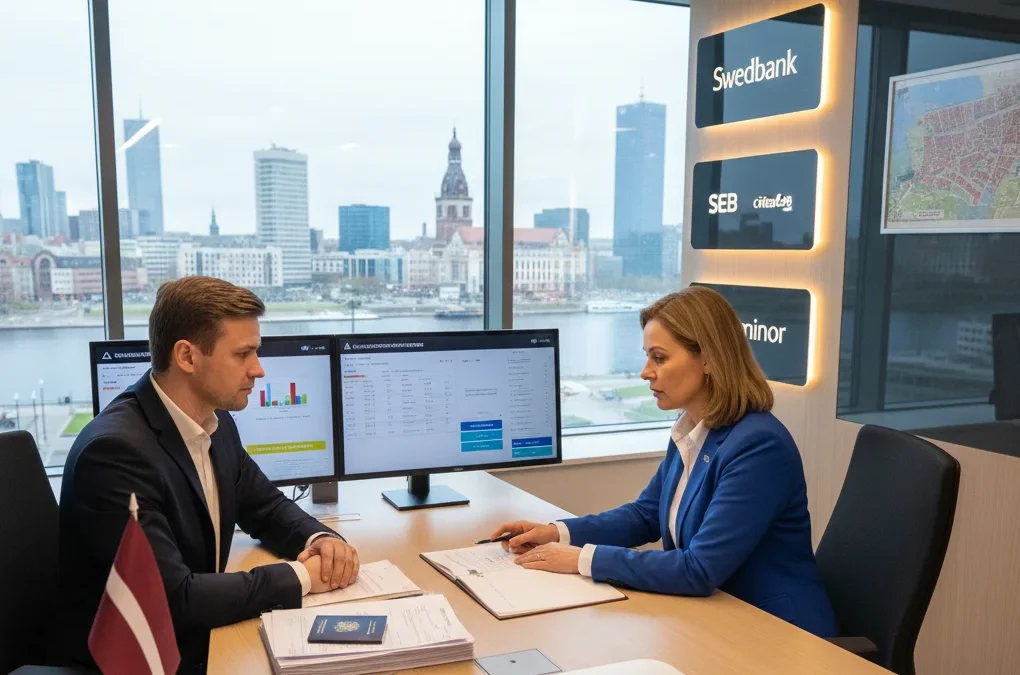
Understanding the landscape prevents wasted time. Latvian banking divides sharply into two worlds: traditional retail banks (Swedbank, SEB, Citadele, Luminor) and fintech challengers (Revolut, Wise, Paysera). Traditional banks offer stability, physical branches, and mortgage possibilities later. Fintechs offer speed. Most newcomers eventually need both.

Accounts generally fall into personal, business, or multi-currency categories. Personal accounts are straightforward if you have residency. Business accounts are where things get sticky, especially for non-resident owners. Multi-currency options are standard; holding USD or GBP alongside EUR is normal here.

Who can actually open one? Technically, anyone legally residing in the EU. Practically, if you are a “non-resident” (meaning you don’t have a Latvian ID code yet), traditional banks might reject you or charge massive “document review fees.” They prioritize customers with a clear “connection to Latvia”—an employment contract, student status, or immediate family. If you just want an account to hold money while living in Dubai, Latvian banks will likely show you the door. Benefits of having a local account are immense: instant “Flash” payments within the EU, integration with local apps like Smart-ID (which you need for everything digital in Latvia), and zero fees on local transfers.

Requirements to Open a Bank Account in Latvia

Documentation is your weapon. Walking into a branch with just a passport is a rookie mistake that leads to rejection.

Personal Documents

You need a valid passport. Not a driver’s license, not a photocopy—a physical passport. EU citizens can use national ID cards. But the magic key is the Latvian Personal Code (personas kods). While some banks claim to onboard non-residents without it, having this code (issued by PMLP) increases approval chances by 500%. You also need proof of address. A declared place of residence (deklarētā dzīvesvieta) is best. If you don’t have that yet, a rental contract signed by both parties sometimes works, but banks hate temporary AirBnB addresses.

Business Documents

For corporate needs, requirements multiply. You need the Registry of Enterprises extract, articles of association, and crucially, proof of UBO (Ultimate Beneficial Owner). Banks will hunt down who actually owns the company. If the owner is a confusing offshore entity, expect a flat rejection.

Minimum Deposits and Connections

Some banks enforce “activation fees” for foreigners. This isn’t a deposit you keep; it’s a fee just to process the application. For non-EU citizens without residency, this fee can range from €100 to €300, non-refundable even if they say no. They essentially charge you for the time it takes to Google your background.

Step-by-Step Process to Open a Bank Account

Don’t just pick the one with the nicest logo. Swedbank and SEB are strict conservatives; they want residents with salaries. Citadele is slightly more flexible and has a better app for quick payments. Luminor focuses heavily on Baltic-wide businesses. If you need speed, start with a fintech to get an IBAN immediately, then work on a traditional bank for long-term security.

Online vs In-Branch

In 2026, you can theoretically open latvian bank account online. Most major banks have apps using biometrics (video selfies) to verify identity. However, this feature often breaks for non-Latvian passports. If the app fails, you must visit a branch. Book an appointment weeks in advance. Walk-ins are ignored in busy centers.

Verification Timelines

Locals get accounts instantly. Foreigners wait. The “Know Your Customer” (KYC) background check takes anywhere from 3 days to 3 weeks. They run your name against sanctions lists, check your source of funds, and verify your employment. Silence during this period is normal. Don’t annoy them with daily calls; it won’t speed up the compliance officer reviewing your file in a back office.

Business Bank Accounts in Latvia

If you think personal banking is tough, open business bank account latvia is extreme sport.

Latvia wants to be a startup hub, but banks remain terrified of money laundering scandals. To open an account for a company, you must prove “economic substance.” This means having a real office, real employees, and real customers in Latvia. A “mailbox company” used just for invoicing will struggle to get banked.

Required documentation includes contracts with partners. If you say “I will do IT consulting,” they want to see draft contracts with clients. If you say “trading,” they want supplier agreements. They are testing if your business is real.

Special features exist for startups. Some banks have “starter kits” offering free transfers for the first year. But these are reserved for residents. If you are a foreigner opening company bank account in latvia, be prepared for a rigorous interview about your business model. They will ask exactly where money comes from. “Consulting fees” is too vague. “Java development services for a German client” is better.

Fees, Costs, and Hidden Charges

Banking is not free for foreigners.

Residents enjoy “Basic Account” rules (capped fees), but non-residents are cash cows.

Monthly Maintenance

While locals pay €1-€2 a month, non-residents might pay €10-€20 just to keep the account open. Read the price list carefully. Look for the section labeled “Non-Resident Services.”

Transaction Costs

SEPA payments (Euro to Euro) are usually free. But if you receive money from outside the EU (SWIFT), banks charge fees like €10-€20 per incoming transfer. Currency conversion spreads are also wide in traditional banks. This is where using Wise or Revolut for international legs saves massive amounts.

Avoiding Unnecessary Charges

Never let your account balance drop to zero if there is a monthly fee; going into unauthorized overdraft triggers penalties. Also, getting a physical calculator (Digipass) costs extra; stick to the mobile app (Smart-ID) which is free and easier.

Tips for a Smooth Account Opening

You have one shot to make a first impression. If a compliance officer marks you as “suspicious,” that flag stays.

Working with Advisors

Banks have customer support, but they are scripted. For complex cases (like high-net-worth individuals or investors), hiring a local legal advisor helps. They know which bank is currently accepting foreigners and how to phrase your application.

Common Mistakes

The biggest error? Lying or being vague. If you trade crypto, say it (and likely get rejected, but at least you were honest). If they find crypto transactions later that you didn’t declare, they freeze your funds instantly. Another mistake is showing up without a translator if you don’t speak English or Latvian well. If the banker can’t understand you, they won’t open the account.

Preparation

Prepare documents in advance. Print your employment contract. Print your rental agreement. Have your tax residency number from your home country ready (TIN). Being organized makes you look like a low-risk professional, not a chaotic liability.

How Can this Complex Process be Accelerated?

Financial infrastructure is the first hurdle of relocation. Whether you are sorting out latvian citizenship eligibility or just trying to pay for internet, securing that IBAN is a victory. If you need help navigating the broader legal landscape, https://latviancitizenship.eu/ offers guidance on making your transition to the Baltics legally secure.

FAQ

Can non-residents open accounts online?

Technically, yes, how to open a bank account in latvia remotely is a popular question. Citadele and some others offer this, but success rates vary. Often, the app directs you to a branch if your passport isn’t from a specific list of countries.

How long does the process take?

For residents: 1 day. For EU non-residents: 1-5 days. For non-EU citizens: 2-4 weeks. Bank account opening latvia is a marathon, not a sprint.

Can family members or partners open joint accounts?

Joint accounts are rare in Latvia. Usually, you open an account in one name and add the spouse as an “authorized user.” Each person having their own separate account is much smoother for bureaucracy.


Sending your request.
Please don't close this window.