
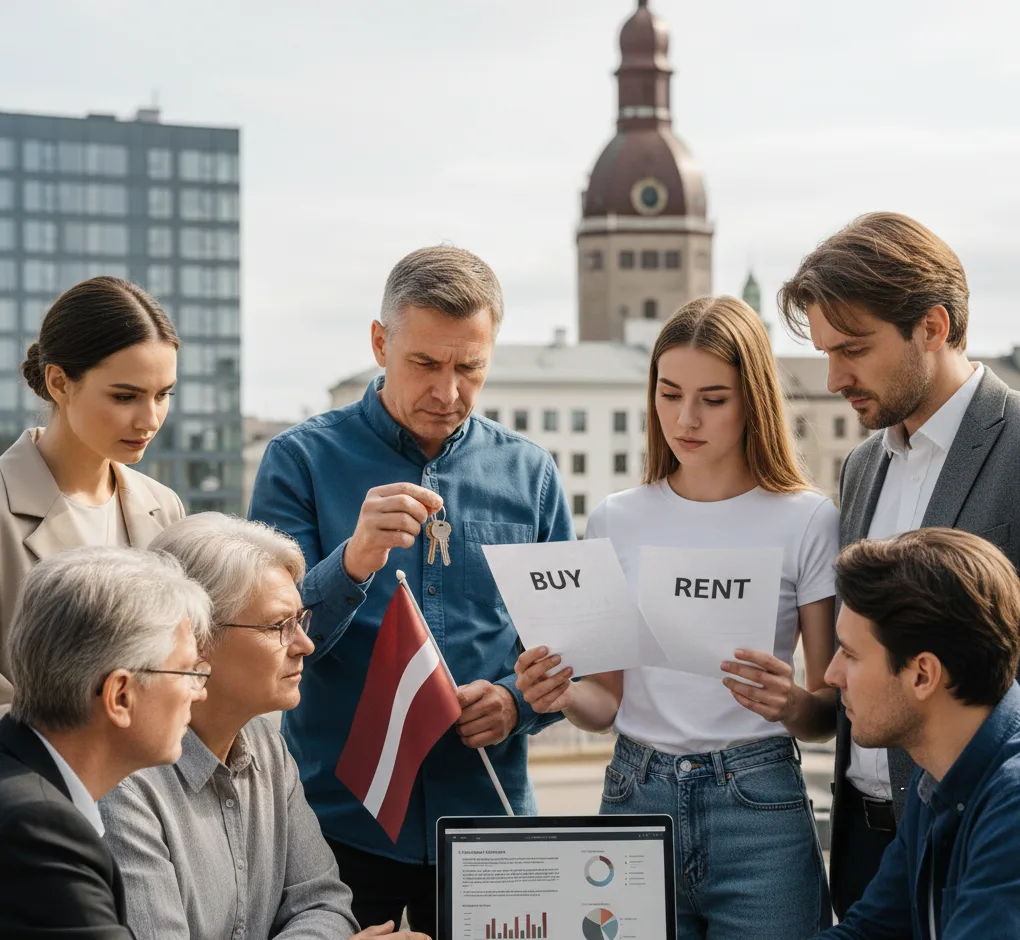
Relocating to the Baltics often looks straightforward on paper. The region is compact, relatively affordable, and increasingly popular among professionals, entrepreneurs, and families seeking long-term stability inside the EU. Yet almost immediately after arrival, most newcomers hit the same quiet but persistent question: should you rent first, or is it smarter to buy property right away? Buy or rent latvia this question worries everyone who is planning to move to this country.
In much of Western Europe, this dilemma barely exists. Long-term renting is normal. Tenants are protected, socially respected, and rarely questioned about their “plans to buy.” Latvia works differently. Here, ownership still carries emotional and cultural weight that outsiders often underestimate.
For locals, property is not just square meters. It signals security, independence, and permanence. Paying rent is frequently perceived as helping someone else build wealth, while owning even a modest apartment represents personal grounding. This mindset seeps into conversations, advice, and expectations — sometimes gently, sometimes with pressure newcomers do not immediately recognize.
Cultural confidence, however, can be misleading. Expats who rush into buying often discover that certainty alone does not protect against practical risks. Seasonal utility spikes, aging Soviet-era infrastructure, and legal nuances like divided ownership structures can quietly transform what looked like a rational purchase into a restrictive and costly obligation. Capital becomes locked inside an illiquid asset precisely when flexibility matters most.
At De Civitate, relocation cases repeat a familiar pattern. Housing decisions and immigration status are rarely separate issues, even when people assume they are. Whether someone is checking Latvian citizenship eligibility by descent or relocating for work, housing strategy needs to match legal reality. This guide does not push one option over the other. Instead, it explains when renting protects you — and when buying Latvia real estate genuinely starts working in your favor.
The Timeline Rule Most People Ignore
Before comparing mortgage rates or scrolling endless listings, it helps to pause and simplify. In Latvia, housing decisions are driven less by math and more by time. Visa type, residency horizon, and personal flexibility outweigh most financial calculations.
Short stays: 3 to 12 months
For short horizons, renting is not just convenient — it is the only rational option. Transaction costs hit immediately when buying. Notary fees, state duties (usually around 1.5% for private individuals), valuations, and agency commissions wipe out any theoretical upside. Buying and reselling within a year almost guarantees a loss.
Liquidity matters more than many expect. Even in an active market, selling property in Latvia takes time. While waiting, owners continue paying utilities, building management fees, and sometimes mortgage interest. For newcomers whose job situation, neighborhood preferences, or visa status may change quickly, flexibility has real financial value. Mobility reduces risk while plans are still forming.
Medium stays: 1 to 3 years
This is where mistakes often happen. People feel “settled enough” to consider buying, but lack lived experience. The safest approach here is simple: rent first, decide later.
One winter in a rental teaches more than dozens of property descriptions. February utility bills expose insulation quality, window seals, and heating systems in ways summer viewings never reveal. A freshly renovated apartment can feel perfect in July and still generate €350–€400 monthly bills in January due to poor energy efficiency.
This period also builds geographic intuition. You learn which streets stay noisy late into the night, where traffic bottlenecks appear, how reliable public transport actually is, and whether nearby schools or kindergartens live up to their reputation. These insights cannot be Googled. They are earned by living through routines.
Long stays: 3 years and beyond
Once the horizon stretches past three years, buying often becomes strategically sound. Rent in Latvia continues to rise gradually due to inflation and limited new rental stock. Mortgage payments for comparable properties, by contrast, tend to remain relatively stable over time.
Property in Riga also acts as a partial hedge against inflation. Instead of paying rent indefinitely, owners convert monthly housing costs into equity. The logic is not emotional; it is structural. Temporary permit holders benefit from flexibility. Permanent residents can afford commitment.
Latvia Rent Prices: Why Listings Never Tell the Full Story
Online platforms like ss.com display what locals call “cold rent.” This number looks attractive — until reality arrives in monthly invoices. Experienced residents calculate housing costs using a blunt but accurate formula:
Base rent + utilities (komunālie) = real expense
Ignoring utilities is the most common budgeting error newcomers make.
Riga benchmarks
Riga sets the tone. Renovated one-bedroom apartments (around 45–55 m²) in Centrs or the Quiet Center usually fall between €550 and €800+. These districts offer walkability, architecture, and proximity to offices and culture. They also come with limited parking and fierce competition for quality units.
Sleeping districts
Move slightly outward to Purvciems, Imanta, Teika, or Pļavnieki, and pricing shifts. Similar apartments often cost €300–€450. These areas may lack postcard charm, but they compensate with practical layouts, green courtyards, large supermarkets, and strong public transport links. Families and budget-conscious professionals often prefer them.
Regional cities
Outside Riga, Latvia rent prices drop noticeably. Liepāja, Valmiera, or Daugavpils can be 30–50% cheaper. An apartment costing €500 in the capital might cost €250–€300 regionally. Smaller job markets and car dependency matter, but for remote workers, regional cities often deliver excellent value.
Houses
House rent in Latvia remains niche and expensive. The rental culture focuses on apartments. Suburban houses in Mārupe, Babīte, or Baltezers usually start around €1,200 and can exceed €2,500 for modern, energy-efficient homes. Supply is limited, and many properties circulate through corporate or diplomatic networks.
Utility costs vary dramatically. In modern A-class buildings, winter heating may stay around €40–€60. In non-renovated panel buildings, heating alone can exceed €250. Combined winter bills frequently pass €350. Always ask for the previous January invoice. Refusal is a warning sign.
Renting Pitfalls Newcomers Often Miss
Most leases run for twelve months, but the risks hide in details. Foreigners are sometimes targeted simply because they urgently need registered addresses to complete residence permits or open bank accounts.
The most critical clause concerns residence declaration (deklarēties). Contracts must explicitly allow it. Without declaration, PMLP may refuse to issue residence cards. Some landlords avoid declaration to reduce taxes or request extra payment. This is a red flag. An apartment without declaration rights is legally useless for immigration.
Furniture definitions matter too. “Partially furnished” may mean only a kitchen and fridge. Older apartments may include heavy furniture owners refuse to remove. Clarifying expectations early prevents frustration and hidden costs.
Scams exist, though they follow predictable patterns. Claims of being “abroad” paired with requests for Western Union, Revolut, or untraceable deposits are classic fraud signals. Legitimate landlords meet in person, provide keys, and show ownership documents. Licensed agents add security but usually charge one month’s rent.
Buying Property in Latvia: What the Process Actually Looks Like
Buying property in Latvia is relatively efficient compared to many EU markets. Foreigners can generally buy apartments and houses in cities without restrictions. Agricultural land and forests are the main exceptions, especially for non-EU citizens.
After choosing a property, buyers typically sign a preliminary agreement and place a 10–15% deposit. Legal due diligence follows. Lawyers or notaries review the Land Registry (Zemesgrāmata) for liens, debts, ownership limits, and unauthorized renovations — a common issue in older buildings.
Funds should always move through an escrow account (darījuma konts). Money is released only after ownership is officially registered. This system minimizes risk.
One Latvia-specific issue is divided ownership (dalītais īpašums). The apartment is owned, but the land beneath it is leased. Owners pay recurring land lease fees, which may increase. Properties with land owned outright consistently retain higher value.
Rent vs Buy: Removing Emotion From the Math
House rent in Latvia will be profitable if you follow a few simple tips. Looking at a five-year horizon clarifies decisions. Paying €600 monthly rent equals €36,000 spent with no asset created.
Mortgage payments, even with interest, gradually build equity. Owners of a €100,000 apartment may repay €15,000–€20,000 of principal within five years. Market appreciation can add upside.
Banks usually finance 70–85% for residents with stable local income. Non-residents often need 40–50% down payments. For stays beyond five years, buying property in Latvia often becomes financially superior — functioning as forced savings rather than pure expense.
Hidden Costs That Quietly Break Budgets
Many relocation budgets fail not because of prices, but because of secondary costs locals take for granted.
Insurance is one example. Banks require full property coverage for mortgages, and renters increasingly insure belongings and liability. Policies are affordable, but skipping them is risky. Water damage in older buildings is common and expensive.
Maintenance funds (uzkrājumu fonds) surprise new owners as well. Buildings collect reserves for roofs, insulation, or elevators. In older buildings, fees can be meaningful even when nothing appears broken.
Finally, many “renovated” properties are only cosmetically updated. Without inspections, buyers may inherit outdated wiring, ventilation problems, or plumbing issues that surface months later.
Final Thoughts
Choosing between renting and buying in Latvia is less about formulas and more about alignment. Renting preserves flexibility. Ownership offers stability and long-term protection against inflation — but demands commitment.
Legal status always comes first. Clean residency simplifies everything: banks trust residents, landlords trust residents. If you are exploring Latvian citizenship eligibility or residence permits, De Civitate handles the bureaucracy — so housing decisions can be made calmly, not under pressure. buy latvia property and start a new stage of your life with professional advice at https://latviancitizenship.eu/.
FAQ
What is the average rent in Latvia right now?
During 2026, expect €450–€600 regarding decent 50 m² apartments inside Riga, excluding utilities. Prices rise slowly but steadily due toward inflation plus limited new supply.
Are Latvia rent prices cheaper outside Riga?
Yes, significantly — often 30-50% lower. But commuting costs (fuel, train tickets) plus time require consideration. Working remotely allows cities like Cēsis alternatively Liepāja offering high quality life regarding much less money.
Is it easy to buy property in Latvia as a foreigner?
Legally, yes. Processes remain open. Main hurdles involve not purchases themselves but passing strict bank AML (Anti-Money Laundering) checks. Proving legal origins regarding every cent used regarding purchases stays mandatory.
What are the biggest risks when buying property in Latvia?
Two biggest risks involve divided ownership (owing rent regarding land) plus unapproved renovations (leading toward fines alternatively difficulties selling later).
House rent in Latvia: is it worth it vs apartment?
Families needing space plus privacy benefit. Be aware: winter heating regarding standalone houses can reach €400–€800/month if heating systems stay outdated (e.g., old gas boilers alternatively poor insulation). Modern heat pumps remain essential regarding keeping costs down.



 English [EN]